
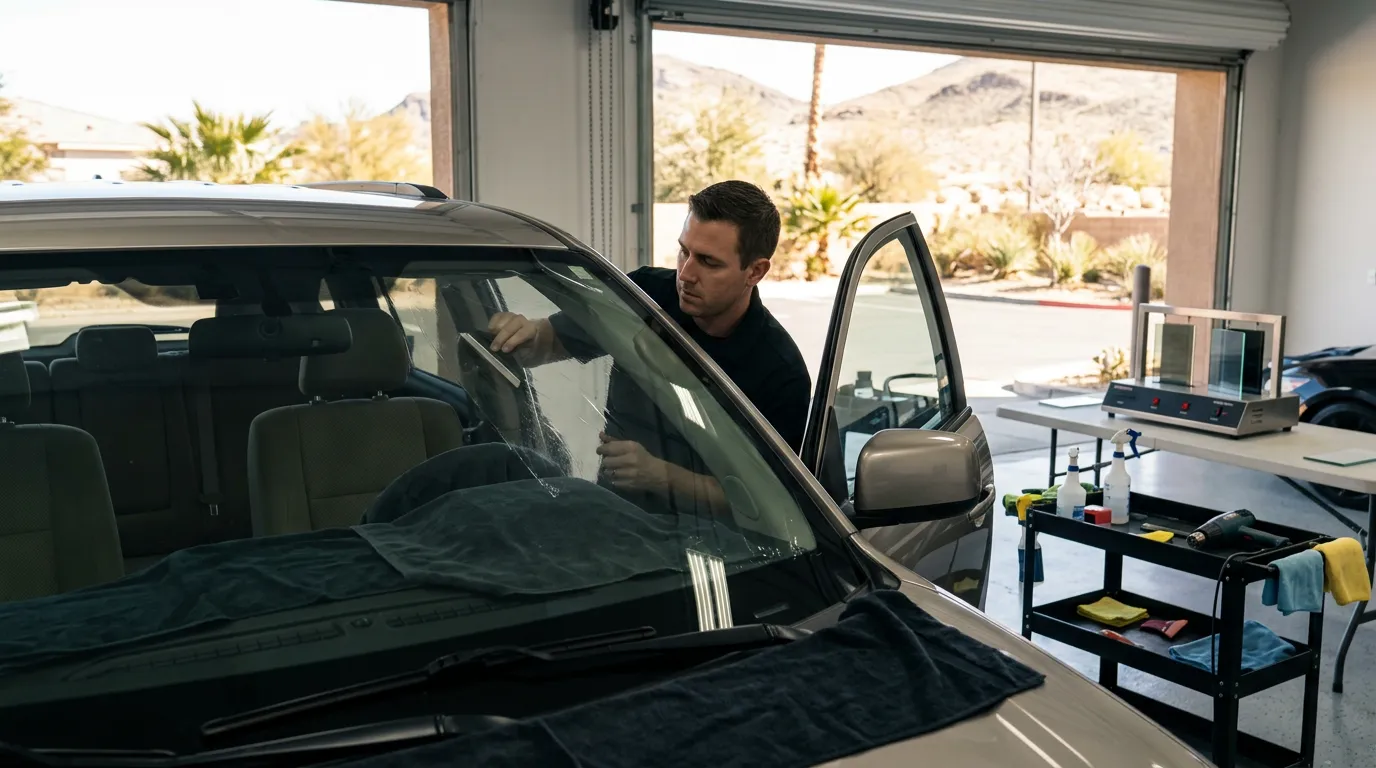
Windshield tint in Summerlin, NV, is something many vehicle owners look into when their dashboard feels hot, the steering wheel is uncomfortable to touch, and the air conditioning takes time to cool the cabin. With the intense sunshine that comes with living in Southern Nevada, it’s easy to understand why reducing solar heat through automotive glass is appealing.
But does windshield tint actually help with cabin heat? The answer is yes, properly selected solar-control film can reduce the amount of solar energy passing through treated glass. The amount depends on the product, the glass, and the conditions. There’s also a legal consideration: Nevada places strict limits on aftermarket windshield tint, even when the film looks almost clear.
For Summerlin, NV, vehicle owners, understanding these differences can help you make a better decision. A film’s darkness doesn’t tell you everything about its heat-rejection performance, and a product advertised as ceramic isn’t automatically approved for full-windshield use.
At Dipped Auto Works, we offer professional automotive window tinting from our shop in Las Vegas, NV. Our certified team works with carbon and ceramic window films and can discuss compliant coverage options that address your comfort goals.
Here’s what you should know about windshield tint, cabin heat, ceramic film, and Nevada’s tint regulations before booking an appointment.
Table of Contents
- How Windshield Tint Affects Cabin Heat
- Why Cabin Heat Is a Concern in Summerlin
- Is Windshield Tint Legal in Nevada?
- Ceramic Windshield Tint vs Regular Tint
- Understanding Window Film Heat Rejection Ratings
- Can Clear Windshield Tint Block Heat?
- Windshield Tint vs Side and Rear Window Tint
- Does Windshield Tint Help the Air Conditioner?
- Benefits and Limitations of Windshield Tint
- Choosing Window Tint for Different Vehicles
- What to Ask Before Window Tint Installation
- Keeping Your Vehicle Cooler in Summerlin
- Frequently Asked Questions
- Contact Dipped Auto Works for Window Tint
- Sources and References
How Does Windshield Tint Affect Cabin Heat?
To understand windshield tint in Summerlin, NV, it helps to know why a parked vehicle gets so hot.
Sunlight passes through automotive glass and reaches the seats, dashboard, steering wheel, and other interior surfaces.
Those surfaces absorb solar energy and warm up. They then release heat into the surrounding cabin.
At the same time, heat can enter through other windows, the vehicle’s body, and the surrounding air.
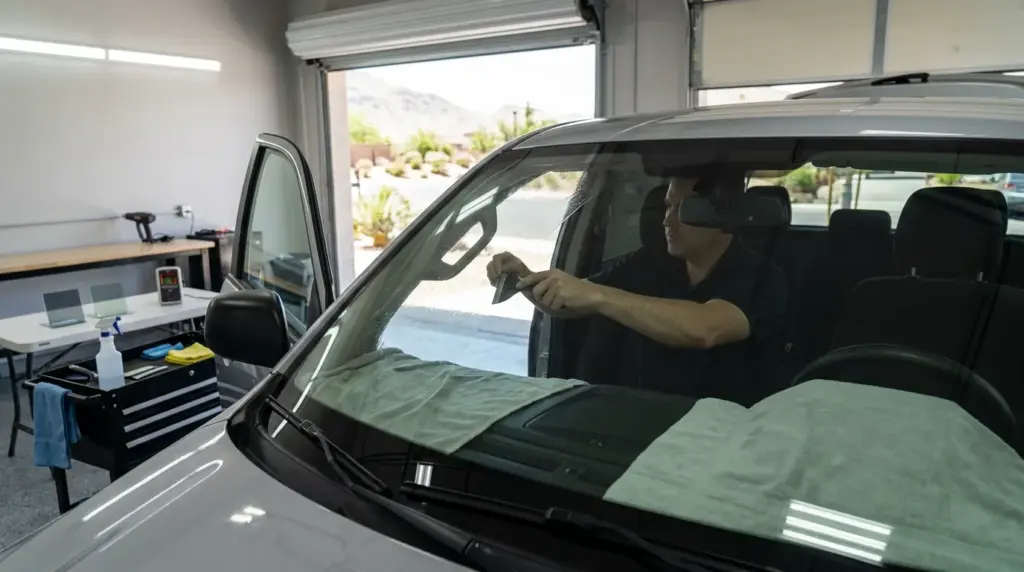
That’s why your interior can feel much hotter than the outdoor temperature after a vehicle has been parked in direct sunlight.
How Does Window Film Reduce Solar Heat?
Heat-rejecting window films are designed to reduce how much solar energy reaches the interior.
Depending on the product, they may absorb or reflect portions of incoming solar radiation.
Some films focus on infrared rejection. Others are designed to manage a broader range of solar energy while maintaining a lighter appearance.
The 3M Automotive Window Film Technical Guide explains how visible light transmission, infrared rejection, and total solar energy rejection describe different film properties.
Reducing solar energy entering through treated glass can slow heat buildup and lessen the amount of direct solar heat occupants feel.
Does Tint Make the Cabin Cold?
No.
Window film doesn’t produce cold air.
It reduces part of the solar heat entering through the glass.
Even a vehicle with high-performance window film will get hot when parked outside for long periods during summer.
The amount of heat reduction depends on the film, treated glass area, sun position, vehicle construction, and ventilation.
The best expectation is reduced solar heat entering through covered glass, not a permanently cool interior.
Why Windshield Heat Is a Concern in Summerlin, NV
Anyone who has climbed into a vehicle after it has been parked outside on a summer afternoon knows how uncomfortable cabin heat can become.
Summerlin, NV, experiences the hot, dry weather common throughout the Las Vegas Valley.
According to the National Weather Service’s Las Vegas Climate Normals, the region experiences prolonged summer heat.
The National Weather Service’s Temperature Overview lists a normal July average high of approximately 104.5 degrees Fahrenheit for the 1991-2020 period.
These temperatures make solar heat management worth considering.
The Windshield Lets Sunlight Reach Large Interior Surfaces
The windshield sits directly in front of the dashboard and front seating area.
When sunlight enters through it, those surfaces can absorb energy and become warm.
Your dashboard may feel hot even when the outside air doesn’t seem unusually uncomfortable.
The steering wheel, center console, and seats may also warm up.
This is one reason vehicle owners ask about windshield heat rejection when shopping for ceramic tint.
Direct Sunlight Can Affect Occupant Comfort
Sunshine through the front glass can make the front seating area feel warmer.
Even with the air conditioning running, occupants may feel radiant heat from the sun.
A properly selected solar-control film can reduce part of that incoming energy where its use is permitted.
For vehicles registered in Nevada, the windshield tint restrictions must be considered before selecting the treatment.
Why Parking Location Matters
Two vehicles parked in Summerlin, NV, can experience different levels of heat buildup.
One might be parked inside a garage.
The other might spend several hours outside in direct sunlight.
Their interior temperatures may differ substantially.
Window film is only one part of cabin heat management. Covered parking, windshield sunshades used while parked, and ventilation can also help.
Is Windshield Tint Legal in Nevada?
This is one of the first questions to address before scheduling windshield tint in Summerlin, NV.
Nevada generally prohibits aftermarket material across the windshield when that material changes the glass color or reduces its light transmission, unless an exception applies.
This rule comes from Nevada Revised Statutes NRS 484D.440.
The restriction applies even when a film is described as clear or nearly invisible.
A film that looks transparent can still reduce the amount of visible light passing through the glass.
What Windshield Tint Does Nevada Allow?
NRS 484D.440 provides an exception for material installed on the topmost portion of the windshield when it meets the statutory conditions.
The bottom edge must meet Nevada’s placement measurement, which requires it to be at least 29 inches above the undepressed driver’s seat using the measurement method described in the law.
The material also cannot be red or amber.
This is often discussed as an upper-windshield tint strip or glare strip.
The law does not establish a general percentage of visible light transmission that makes aftermarket full-windshield tint legal.
What About Medical Exemptions?
Nevada provides a permit process for certain exceptions.
Under Nevada Administrative Code NAC 484D.280 and 484D.285, qualifying applicants can request an exemption and submit the required documentation.
Certain medical conditions supported by a physician’s sworn statement may qualify for consideration.
An application is not the same as an approved permit.
Vehicle owners should obtain the necessary authorization before relying on an exemption.
Is 70% or 80% Windshield Tint Automatically Legal?
No.
A percentage such as 70% or 80% describes visible light transmission, not whether the installation meets Nevada law.
Even a light film can reduce transmission through the windshield.
Don’t assume a product is legal because it looks clear, has a high VLT rating, or is sold as ceramic windshield tint.
Before booking, ask the installer to review the applicable Nevada requirements and your vehicle’s situation.
Why This Matters at Dipped Auto Works
Our window tint service page lists windshield ceramic tint and glare strip options.
Those service descriptions do not override Nevada’s legal restrictions.
Any proposed windshield installation must be assessed for legal suitability, including whether it is a permitted upper strip, qualifies for an approved exemption, or falls under another applicable exception.
For many vehicle owners, compliant side and rear ceramic window tint is the more practical way to reduce solar heat entering through automotive glass.
Ceramic Windshield Tint vs Regular Tint: What’s the Difference?
Not every window tint product is made the same way.
The material used in the film affects how it handles sunlight, its appearance, and other performance characteristics.
Dyed Window Tint
Dyed window film is commonly used to reduce visible light transmission and create a darker appearance.
It can reduce glare, but the amount of solar heat it rejects depends on the product.
Dark appearance alone doesn’t guarantee strong heat-rejection performance.
Carbon Window Tint
Carbon-based automotive films are another option for vehicle owners.
They are available in different shades and may offer heat rejection along with glare reduction.
At Dipped Auto Works, we offer carbon window tint packages for appropriate vehicle windows.
These packages can be discussed alongside ceramic options.
Ceramic Window Tint
Ceramic film uses specialized materials designed to manage solar radiation without relying solely on dark coloring.
Certain ceramic films can reject substantial amounts of infrared energy while allowing a relatively high amount of visible light to pass through.
That makes ceramic tint appealing to people who want heat rejection without an extremely dark appearance.
Actual performance varies by manufacturer and film series.
And even if the film is nearly clear, its use across a vehicle’s windshield must comply with the law.
Which Film Is Better for Heat Rejection?
Rather than choosing based only on whether a film is ceramic or carbon, ask to see its measured performance data.
A well-documented film with strong total solar energy rejection may be a better fit than a product advertised with an impressive but narrowly measured infrared percentage.
What matters is the film’s tested performance, the glass receiving it, and whether the installation is legally permitted.
Understanding Windshield Tint Heat Rejection Ratings
When comparing windshield tint in Summerlin, NV, you may see several numbers on a window film specification sheet.
These numbers describe different properties.
Understanding them can help you avoid confusing tint darkness with heat rejection.
| Rating | What It Measures | Why It Matters |
|---|---|---|
| VLT | Visible Light Transmission | Shows how much visible light passes through the filmed glass |
| TSER | Total Solar Energy Rejection | Shows the share of total solar energy rejected |
| IRR | Infrared Rejection | Often measures rejection over a limited infrared wavelength range |
| IRER | Infrared Energy Rejection | Measures rejection over a broader infrared range, accounting for absorbed energy that may reradiate inward |
| UV Rejection | Ultraviolet radiation rejected | Helps evaluate UV protection |
These definitions are based on 3M’s published automotive window film terminology.
What Does VLT Mean?
Visible Light Transmission refers to the percentage of visible light passing through the glass and film.
A higher VLT means more visible light passes through.
A lower VLT generally means a darker appearance.
VLT is especially relevant to legal limits and nighttime visibility.
It does not, by itself, describe how much total solar heat is rejected.
Why Is TSER Useful?
Total Solar Energy Rejection measures how much of the sun’s total energy is rejected by the filmed glass.
Because sunlight contains visible, infrared, and ultraviolet energy, TSER gives a broader picture than an infrared-only figure.
When comparing two films, look at their tested TSER values under comparable conditions.
Higher TSER generally means less solar energy passes through the treated glass in the stated test conditions.
Why Can Infrared Rejection Numbers Be Confusing?
You may see window films advertised with very high infrared rejection percentages.
Those figures can be real, but you need to know the wavelength range used in the test.
Some infrared rejection ratings describe performance over a narrow band rather than the entire solar spectrum.
A film with a high IRR number doesn’t automatically reject that same percentage of all incoming solar heat.
Ask the installer for TSER and IRER information as well.
What About UV Protection?
Many automotive window films are designed to reject a large share of ultraviolet radiation.
This can help reduce UV exposure through treated glass and limit some forms of interior fading.
UV rejection is not the same as total heat rejection.
A film can provide strong UV protection without rejecting an equally high percentage of total solar energy.
Can Clear Windshield Tint Block Heat?
Yes, some nearly clear automotive films can reduce solar heat transmission.
They use technology intended to reject portions of solar energy while allowing much of the visible light to pass through.
That means a film doesn’t have to look extremely dark to reduce solar heat.
Why Do People Choose Clear Heat-Rejecting Film?
Vehicle owners may prefer a lighter appearance for several reasons:
- They want to preserve a bright interior.
- They prefer the factory glass appearance.
- They don’t want a strongly darkened look.
- They want to compare heat rejection separately from privacy.
A manufacturer’s film specification sheet can show the difference between visible light transmission and heat rejection.
Does Clear Mean Legal on the Windshield?
No.
This is especially relevant when researching windshield tint in Summerlin, NV.
A nearly clear film may still reduce the windshield’s visible light transmission or alter its color.
Under Nevada’s windshield restrictions, that can make ordinary aftermarket full-windshield installation unlawful without a qualifying exception.
The fact that a film blocks heat while appearing transparent does not establish its legal suitability.
What Is a Better Alternative for Most Nevada Vehicles?
Consider compliant ceramic film on eligible side and rear windows.
This can reduce solar energy entering through those areas while leaving the main windshield unchanged.
A properly fitted reflective sunshade used when parked can also help shade the dashboard and front seating area.
Ask Dipped Auto Works about ceramic window tint options suited to your vehicle and Nevada’s requirements.
Windshield Tint vs Side Window Tint for Cabin Heat
The windshield is a large source of incoming sunlight, but it isn’t the only place solar heat enters.
Your side and rear windows can also let sunlight warm the cabin.
This matters because owners can make meaningful changes to solar exposure without necessarily applying film across the windshield.
Front Side Window Tint
Front side windows are positioned beside the front seats.
When the sun shines through them, occupants can feel direct warmth on their arms, shoulders, and seating surfaces.
Nevada allows certain nonreflective tint on the windows immediately beside the driver when the combined film-and-glass transmission meets the statutory 35% threshold, with a 7% tolerance.
The Nevada tint statute provides the complete wording.
Ask for a measurement of the finished glass-and-film combination rather than relying only on the number printed on a film sample.
Rear Side and Rear Window Tint
The rules for rear side and rear windows differ from those for the front side glass.
Nevada permits tint on the rear side and rear window under the conditions stated in NRS 484D.440, including the required outside mirrors.
The best heat-rejection choice still depends on the selected film.
A darker tint is not automatically the best heat-rejecting tint.
Is Tinting More Windows Better for Cabin Heat?
Treating more eligible glass can reduce solar energy entering through more parts of the vehicle.
That may help cabin comfort, particularly when the sun moves around the car throughout the day.
Actual results depend on film properties, window area, and sun exposure.
Dipped Auto Works offers ceramic and carbon window tint packages for selected windows and broader vehicle coverage.
Ask what each package includes before deciding.
Does Heat-Rejecting Tint Help Your Vehicle’s Air Conditioner?
This is another common question about windshield tint in Summerlin, NV.
Reducing solar heat entering through glass may reduce part of the cooling load on your vehicle’s air conditioning system.
But the effect depends on the size of the treated glass area and the amount of solar energy the film rejects.
What Happens When You Enter a Hot Parked Car?
After several hours outside, the seats, dashboard, trim, and cabin air may all be warm.
The air conditioner has to cool the air while interior surfaces continue releasing stored heat.
Heat-rejecting film can reduce some of the incoming solar energy, but it doesn’t remove heat already stored in those surfaces.
That’s one reason opening the vehicle briefly to release hot air can help before relying on air conditioning.
Will the Cabin Cool Faster?
A vehicle receiving less solar heat through treated glass may be easier to cool under some conditions.
That doesn’t mean every film will produce the same measurable change in cooling time.
Vehicle size, ventilation, outside temperature, cabin materials, and sunlight all affect the result.
Be cautious about claims promising a fixed temperature reduction without vehicle-specific testing.
Does Tint Reduce Fuel or Battery Use?
Reducing cooling demand may reduce the energy an air conditioner needs under some conditions.
The actual effect on fuel consumption or electric vehicle range varies widely.
Don’t assume a published laboratory film performance figure translates directly into a particular range improvement or fuel saving.
The most practical benefit to evaluate is the comfort you experience from reduced solar exposure.
Benefits and Limitations of Windshield Tint in Summerlin, NV
When comparing window tint options, it’s helpful to separate what the product is designed to do from what it cannot guarantee.
Potential Benefits of Suitable Heat-Rejecting Film
- Reduces solar energy transmission through treated glass
- Can improve comfort in direct sunlight
- May help reduce air conditioning demand under certain conditions
- Can provide UV rejection, depending on the film
- May reduce glare when visible light transmission is lowered
- Can support a more comfortable cabin environment
What Window Tint Cannot Do
- Keep a parked vehicle cold during intense summer heat
- Replace the air conditioning system
- Prevent all UV exposure from every surface
- Eliminate every source of glare
- Make a vehicle completely private
- Guarantee a certain cabin temperature
- Override Nevada windshield tint regulations
What About Nighttime Visibility?
Dark films reduce visible light reaching occupants.
This can make it harder to see through treated glass at night or during poor weather.
Film clarity, haze, reflections, and compatibility with vehicle displays are also worth discussing.
For a windshield, clear forward visibility is especially important.
Even if a film looks acceptable in bright daylight, that doesn’t establish its suitability for low-light conditions or legal use.
Choosing Window Tint for Teslas, SUVs, and Everyday Cars
Different vehicles have different glass layouts.
A sedan with a conventional roof, a Tesla with a large glass roof, and an SUV with multiple rows of windows may not respond identically to the same film package.
Tesla Model 3 and Model Y
Tesla owners often ask about heat rejection because of the vehicles’ large glass areas.
Solar energy can enter through side windows, the rear glass, and roof glazing, depending on the model.
Dipped Auto Works offers Tesla window tint services for owners who want to discuss ceramic and carbon film options.
Any window treatment should account for Tesla’s glass construction, cameras, sensors, and applicable installation restrictions.
Luxury Sedans
Owners of BMW, Mercedes-Benz, Audi, and similar vehicles may want to maintain a clean factory appearance while reducing sunlight through eligible windows.
A light-appearing ceramic film can be worth comparing with a darker film based on actual solar rejection ratings.
Ask the installer to explain the measured differences.
Family SUVs
SUV owners may be concerned about heat reaching passengers in the second or third row.
Rear side glass can receive substantial sunlight throughout the day.
Suitable ceramic film on eligible windows may help reduce that exposure.
If your SUV already has dark factory privacy glass, ask whether it has the solar heat-rejection properties you want.
Dark factory glass and aftermarket heat-control film do not necessarily perform the same way.
What to Ask Before Professional Windshield Tint Installation
A good consultation should start with your vehicle, comfort concerns, and legal requirements.
You shouldn’t have to guess what kind of film will be installed or which glass surfaces are included.
Ask About Nevada Compliance First
Before discussing a full windshield film, confirm whether it is legally permitted for your vehicle.
Ask about the upper-windshield strip rules, any applicable approved exemptions, and compliant alternatives.
A certified installer should not treat film transparency as proof of legality.
Ask for the Film Specification Sheet
Request information about:
- Film manufacturer and series
- Visible Light Transmission (VLT)
- Total Solar Energy Rejection (TSER)
- Infrared Energy Rejection (IRER), if available
- UV rejection
- Film warranty
- Approved glass surfaces
A sample can help you compare appearance, but technical ratings are more useful for judging heat performance.
Ask About Vehicle Electronics
Modern vehicles may have cameras, rain sensors, head-up displays, antennas, and other components near or within the windshield assembly.
Film selection and installation must account for the vehicle manufacturer’s instructions.
Ask whether a planned treatment could interfere with optical systems or require precautions around electronic components.
Ask About Installation and Aftercare
Professional tint installation generally requires glass cleaning, film fitting, application, and inspection.
Your installer should explain when to clean the glass after installation and which products are suitable.
Temporary moisture or haze may be present while certain films dry, but persistent defects should be inspected by the shop.
Dipped Auto Works lists warranty-backed window tint services, including carbon and ceramic packages.
Our team can discuss which services are suitable for your vehicle and provide the applicable warranty details.
Other Ways to Keep Your Car Cooler in Summerlin, NV
You don’t have to rely on windshield tint alone to address summer cabin heat.
A few daily habits can help reduce how much heat collects inside your vehicle.
Use a Windshield Sunshade When Parked
A properly fitted reflective sunshade can block direct sunlight from reaching much of the dashboard and front interior.
This is a practical option for vehicles whose windshields cannot receive aftermarket full-glass tint.
Remove the sunshade completely before operating the vehicle.
Park Under Cover When Possible
A covered parking space or garage reduces direct solar exposure.
This can make a noticeable difference in how much sunlight reaches the glass and interior surfaces.
Be mindful of the surrounding air temperature, which remains a factor even in shade.
Release Hot Air Before Cooling
If the cabin is extremely hot, allowing trapped hot air to escape can help before the air conditioning takes over.
Use your vehicle’s ventilation controls and follow its owner’s manual.
Avoid leaving windows open in situations where security or weather is a concern.
Choose Compliant Ceramic Window Tint
For Summerlin, NV, vehicle owners who want heat rejection, compliant side and rear window tint may be a good place to start.
Compare products by their tested solar performance rather than tint darkness alone.
Our team at Dipped Auto Works can help you review your options and understand which windows can be treated.
Never Leave Children or Pets in a Parked Vehicle
A parked vehicle can become dangerously hot even when the outside temperature seems manageable.
Window tint and sunshades are not substitutes for occupant safety.
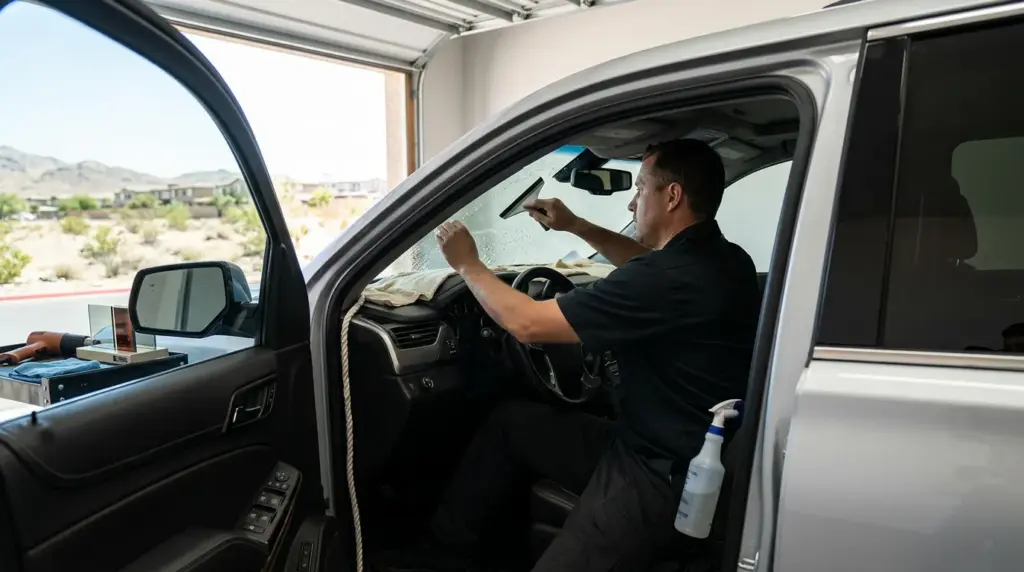
Never leave children or pets unattended inside a parked vehicle.
Windshield Tint in Summerlin, NV: 7 Frequently Asked Questions
1. Does windshield tint actually reduce cabin heat?
Yes. Solar-control window film can reduce the amount of solar energy passing through treated glass.
The result depends on the film’s tested performance, the glass, and the amount of sunlight.
It cannot keep a parked vehicle cold or prevent all heat buildup.
In Nevada, windshield applications also have legal restrictions that must be checked before installation.
2. Is ceramic windshield tint better than regular tint for heat rejection?
Certain ceramic films can provide strong solar heat rejection without requiring a very dark appearance.
But the ceramic label alone doesn’t guarantee better performance than every other film.
Compare Total Solar Energy Rejection, infrared ratings, visible light transmission, and product specifications.
Also confirm that the proposed application meets Nevada law.
3. Is full windshield tint legal in Summerlin, NV?
Nevada generally prohibits aftermarket material across the windshield if it changes color or reduces visible light transmission, unless a statutory or approved regulatory exception applies.
The state allows qualifying material on the topmost portion of the windshield under the conditions stated in NRS 484D.440.
Approved exemptions may also apply in certain situations.
A nearly clear film is not automatically legal.
4. Will 70% windshield tint keep my car cooler?
A film with 70% visible light transmission may reject some solar energy, but the VLT number alone doesn’t tell you how much heat it blocks.
You need the product’s tested heat-rejection data.
There is also a legal concern: a 70% aftermarket full-windshield film is not automatically permitted in Nevada.
Ask an installer about lawful alternatives.
5. Is windshield tint or side window tint better for reducing heat?
Both can reduce incoming solar energy when suitable film is applied to the glass.
The windshield may receive strong direct sunlight, while the side and rear windows also contribute to cabin heating.
For many Nevada vehicles, compliant ceramic tint on the side and rear windows provides a practical option without violating the general full-windshield restrictions.
6. Does ceramic window tint help protect a vehicle’s interior?
Many ceramic window films provide UV rejection and reduce some incoming solar energy.
That may help limit certain forms of sun-related fading and make the cabin more comfortable.
Protection depends on the film and the treated glass.
Regular interior care and sensible parking habits remain useful.
7. Where can I discuss windshield tint and ceramic window tint near Summerlin, NV?
Dipped Auto Works serves vehicle owners from Summerlin, NV, at our shop located at 4305 Dean Martin Dr #120, Las Vegas, NV 89103.
We offer professional carbon and ceramic window tinting and can review legal coverage options, heat-rejection ratings, and warranty details.
Call (702) 379-8716 or visit our contact page to request an appointment.
Ask Dipped Auto Works About Windshield Tint and Cabin Heat Near Summerlin, NV
If you’re researching windshield tint in Summerlin, NV, start by thinking about what you want to change.
Is your front seating area uncomfortable in direct sunlight? Does your car get hot while parked? Are you looking for better solar heat rejection without making every window extremely dark?
These are all useful questions to bring to your tint consultation.
Solar-control film can reduce heat passing through treated glass, but the film’s performance depends on its specifications. And in Nevada, full-windshield applications have legal restrictions that must be respected.
For many vehicle owners, suitable ceramic tint on the side and rear glass, combined with a parked-vehicle windshield sunshade, can be a practical approach to cabin comfort.
At Dipped Auto Works, our certified team helps owners from Summerlin, NV, review window tint options based on their vehicles, heat concerns, and legal requirements.
We offer:
- Carbon window tint
- Ceramic window tint
- Front side window tint
- Side and rear window tint packages
- Legally suitable upper-windshield glare strip options
- Tesla window tint services
- Warranty-backed installation services
We can also explain how different films compare in heat rejection, visible light transmission, and UV protection.
Contact Dipped Auto Works
Business Name: Dipped Auto Works
Address: 4305 Dean Martin Dr #120, Las Vegas, NV 89103
Phone: (702) 379-8716
Business Hours: Monday through Saturday, 9 AM to 6 PM
Website: www.dippedautoworks.com
Schedule an Appointment: Contact Dipped Auto Works
Want to reduce the amount of solar heat entering your vehicle?
Call (702) 379-8716 or fill out our contact form to schedule a window tint consultation.
Tell us your vehicle’s year, make, and model, along with the windows you’re interested in treating.
We’ll help you compare suitable ceramic and carbon film options, understand Nevada’s windshield regulations, and select a lawful treatment that fits your comfort goals.
Sources and References
The following sources support the information about Nevada windshield tint laws, automotive solar film performance, local climate, and Dipped Auto Works services.
1. Nevada Revised Statutes, NRS 484D.440: Restrictions on Tinting of Windshield or Side or Rear Window
- Publisher: Nevada Legislature
- Publication Date: 2025 statutory revision; online compilation revised April 15, 2026
- URL: https://www.leg.state.nv.us/NRS/NRS-484D.html#NRS484DSec440
2. Nevada Administrative Code, NAC 484D.280 and 484D.285: Window Tint Exemptions
- Publisher: Nevada Legislature
- Publication Date: Original regulations effective July 17, 1996; current webpage date not listed
- URL: https://www.leg.state.nv.us/NAC/NAC-484D.html
3. Auto Films: Official 3M Support
- Publisher: 3M
- Publication Date: Not listed
- URL: https://www.3m.com/3M/en_US/car-personalization-us/support/
4. 3M Automotive Window Film, Crystalline Series
- Publisher: 3M
- Publication Date: Not listed
- URL: https://www.3m.com/3M/en_US/p/d/b00016683/
5. Las Vegas 1991-2020 Climate Normals
- Publisher: National Weather Service, NOAA
- Publication Date: 2021 climate normals release; webpage date not listed
- URL: https://www.weather.gov/vef/1991-2020Normals
6. Las Vegas Climate Book
- Publisher: National Weather Service, NOAA
- Publication Date: Ongoing online reference; individual temperature overview date varies
- URL: https://www.weather.gov/vef/lasvegas_climate_book
7. Automotive Window Tint
- Publisher: Dipped Auto Works
- Publication Date: Not listed
- URL: https://dippedautoworks.com/services/window-tint/
8. Tesla Window Tint
- Publisher: Dipped Auto Works
- Publication Date: Not listed
- URL: https://dippedautoworks.com/tesla-services/tesla-window-tint/
Best Color Change Wraps in Las Vegas, NV: A Comprehensive Guide
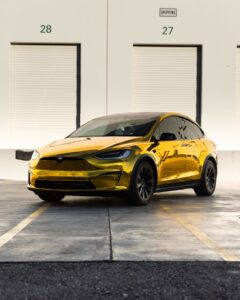
Discover the best color change wraps in Las Vegas, NV, with Dipped Auto Works. From choosing the perfect color to expert installation, learn how to transform your car with a vinyl wrap that suits your style and protects your vehicle. Call (702) 379-8716 to schedule your consultation today!
Product Brand: Dipped Auto Works
5
Pros
- Discover the best color change wraps in Las Vegas, NV, with Dipped Auto Works. From choosing the perfect color to expert installation, learn how to transform your car with a vinyl wrap that suits your style and protects your vehicle. Call (702) 379-8716 to schedule your consultation today!
