
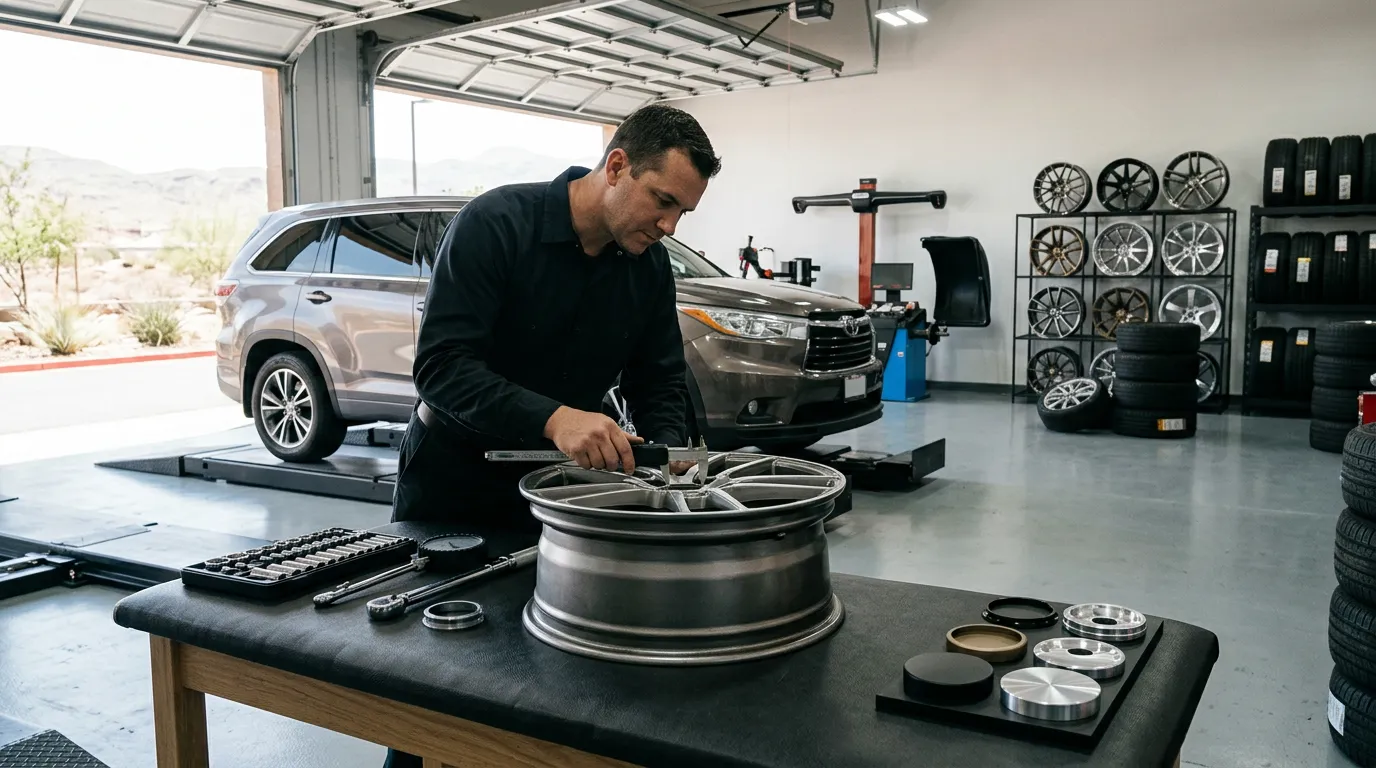
Custom Wheels and Rims in Henderson, NV, can change the appearance of your vehicle, but choosing the right set involves more than finding a design you like. Wheel diameter, width, offset, bolt pattern, tire size, and finish all affect the finished result. A wheel that looks perfect in a photograph may not fit your car correctly, and a finish that looks great in a showroom may need more attention when exposed to Southern Nevada’s heat and road dust.
Maybe you want larger wheels for your Tesla Model Y, a blacked-out look for your BMW, or a set of off-road wheels for your truck. You might also want to replace damaged factory rims with something that looks better without changing how your vehicle feels on the road.
Whatever your goal, proper fitment comes first.
The wrong wheels can cause tire rubbing, steering clearance problems, vibrations, premature tire wear, or interference with brake components. The right wheel and tire combination should suit your vehicle’s design, load requirements, and everyday use.
At Dipped Auto Works, we provide professional custom wheel and tire services for vehicle owners from Henderson, NV, and throughout the Las Vegas Valley. Our certified team helps customers compare wheel sizes, tire options, finishes, and installation requirements.
This guide explains the measurements you need to know, the differences between popular rim finishes, and what to check before ordering custom wheels.
Table of Contents
- Why Custom Wheel Fitment Matters
- Custom Wheels vs Rims: What’s the Difference?
- Understanding Wheel Diameter and Width
- What Is Wheel Offset?
- Bolt Patterns and Center Bore Fitment
- Brake and Suspension Clearance
- Choosing Tires for Custom Wheels
- Plus Sizing and Larger Wheels
- Cast, Flow-Formed, and Forged Wheels
- Popular Custom Wheel Finishes
- How Henderson Weather Affects Wheel Care
- Custom Wheels for Different Vehicle Types
- Wheel Installation, Balancing, and TPMS
- Common Custom Wheel Mistakes
- Custom Wheel Selection Checklist
- Frequently Asked Questions
- Schedule Custom Wheels and Rims at Dipped Auto Works
- Sources and References
Why Custom Wheels and Rims in Henderson, NV, Need Proper Fitment
Custom wheels are one of the most noticeable changes you can make to a vehicle.
A different spoke design, finish, or diameter can give a sedan a sportier appearance, make a truck look more rugged, or complement the body lines of a luxury SUV.
But appearance is only half the decision.
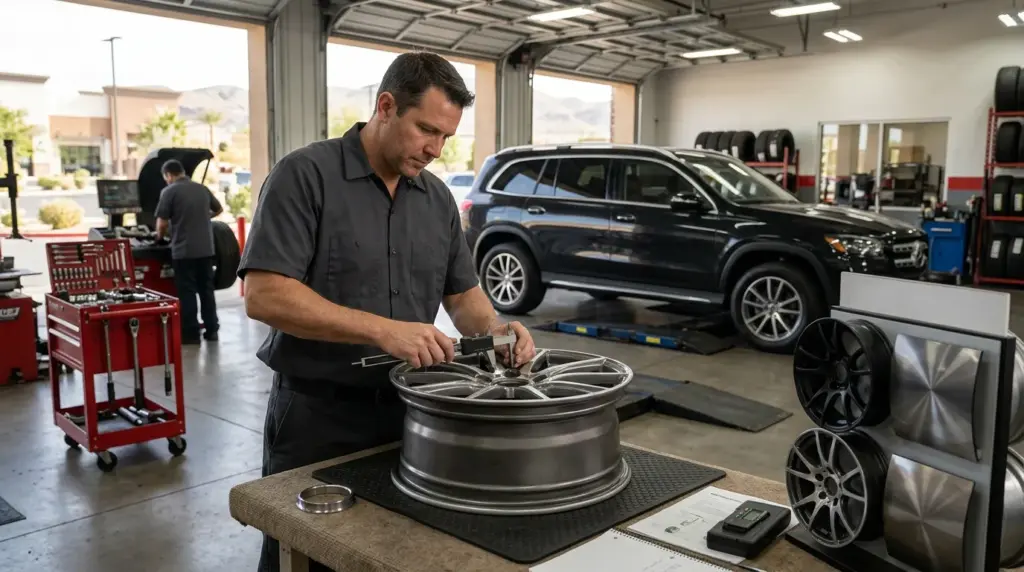
Wheels are part of the vehicle’s rolling assembly. They must support the vehicle’s load, fit the mounting hub, clear the brakes, and work with tires suited to the vehicle.
What Happens When Wheels Don’t Fit Correctly?
Poor wheel fitment can lead to several problems:
- Tires rubbing against fenders or wheel liners
- Wheels contacting brake calipers
- Reduced clearance around suspension parts
- Vibration caused by mounting or balance problems
- Incorrect lug hardware seating
- Uneven tire wear
- Changes in steering feel
- Interference when turning or going over bumps
According to Tire Rack’s wheel fitment guidance, determining whether a wheel fits requires checking much more than diameter and bolt pattern.
The evaluation also includes center bore, offset, wheel width, brake clearance, and other vehicle measurements.
Why Does This Matter for Henderson Vehicle Owners?
If you commute around Henderson, NV, you probably want wheels that look good without making routine travel uncomfortable.
A sports car owner may prioritize appearance and cornering response.
A truck owner may want room for an approved all-terrain tire.
A family SUV owner may prefer a finish that’s easy to clean and a wheel size that preserves comfortable ride characteristics.
The right choice depends on your actual vehicle and the way you use it.
Custom Wheels vs Rims: Are They the Same Thing?
People often use “wheels” and “rims” interchangeably when shopping for automotive upgrades.
In casual conversation, both terms usually refer to the metal wheel assembly that supports the tire.
Technically, the rim is the outer portion of the wheel where the tire seats.
The complete wheel also includes the center section, mounting surface, spokes, and other structural features.
What Are Aftermarket Wheels?
Aftermarket wheels are replacements for the wheels originally supplied with a vehicle.
They may offer:
- Different spoke designs
- New finishes and colors
- Alternative diameters
- Different widths and offsets
- Different construction methods
- Model-specific fitment options
Not every aftermarket wheel changes the vehicle’s original dimensions.
You can choose a different appearance while retaining the factory wheel size when suitable replacements are available.
Are Custom Wheels Always Bigger?
No.
Some owners choose the same diameter as the original equipment wheels.
Others move to a larger size, choose a different width, or select a different approved fitment.
A well-selected 18-inch wheel can suit one vehicle better than a 20-inch wheel.
The goal should be a complete wheel and tire package that fits correctly.
Understanding Custom Wheel Diameter and Width
When looking at custom wheels and rims in Henderson, NV, you may see a size listed as:
19 x 8.5
The first number describes the wheel diameter in inches.
The second number describes the width in inches, measured between the tire bead seats.
Both dimensions matter.
Wheel Diameter Explained
Wheel diameter determines which tire bead diameter is compatible with the rim.
A 19-inch wheel must use a tire designed for a 19-inch rim.
You cannot safely mount an 18-inch tire on a 19-inch wheel.
The National Highway Traffic Safety Administration recommends using the vehicle manufacturer’s tire size or another approved size.
The manufacturer’s tire and loading label is usually found in the driver’s door opening.
Does a Larger Wheel Improve Handling?
A larger wheel can change handling characteristics, but it doesn’t automatically make a vehicle perform better.
When wheel diameter increases, a suitable lower-profile tire may be used to keep the overall tire diameter close to the original.
A shorter sidewall can change steering response.
It may also transmit more road impacts into the cabin.
The wheel’s weight, tire construction, and suspension setup all affect the result.
Why Wheel Width Matters
Wheel width influences the range of tires that can be mounted correctly.
A wider wheel may accommodate a wider tire, provided the tire manufacturer’s approved rim-width range and vehicle clearances allow it.
An excessively wide wheel can create interference with suspension or body components.
The Tire Rack tire specification guide explains that tire manufacturers establish approved rim-width ranges for each tire size.
Don’t choose a wheel width based only on appearance.
Can You Use Wider Wheels in the Rear?
Some vehicles use a staggered setup with wider rear wheels or tires.
This can be suitable for certain rear-wheel-drive and performance vehicles.
But staggered sizing affects tire rotation, handling, and replacement choices.
If your vehicle has all-wheel drive, matching the required rolling characteristics may be especially important.
Ask the installer to check manufacturer restrictions before selecting a staggered package.
What Is Wheel Offset, and Why Does It Matter?
Offset is one of the most misunderstood parts of custom wheel sizing.
It describes the distance between the wheel’s mounting surface and its centerline.
Offset is usually measured in millimeters.
A wheel may be labeled with a positive number, such as ET35 or ET45.
That number affects where the wheel sits relative to the suspension and fender.
Tire Rack’s wheel offset guide explains the differences between positive, zero, and negative offset.
Positive Offset
With positive offset, the mounting surface sits toward the outer face of the wheel.
All else being equal, increasing positive offset moves the wheel farther inward.
Positive offset is common on many passenger cars and SUVs.
Zero Offset
Zero offset places the mounting surface at the wheel’s centerline.
This doesn’t automatically mean the wheel will sit flush with the fender.
The resulting position still depends on wheel width and vehicle design.
Negative Offset
With negative offset, the mounting surface is positioned toward the inner side of the wheel.
This moves the wheel farther outward when other dimensions remain the same.
Certain truck and specialty wheel designs use negative offset.
How Much Difference Does Offset Make?
Consider two wheels with the same width:
- Wheel A: 19 x 8.5, ET45
- Wheel B: 19 x 8.5, ET35
The second wheel sits approximately 10 millimeters farther outward because its offset is 10 millimeters lower.
That comparison assumes the wheels have identical widths.
If wheel width changes too, both inner and outer clearances must be recalculated.
Can the Wrong Offset Cause Rubbing?
Yes.
A wheel positioned too far inward may contact suspension or brake components.
A wheel positioned too far outward may place the tire close to the fender.
Rubbing may only appear when steering, carrying passengers, or moving over uneven pavement.
This is why wheel offset should be checked together with tire size and suspension clearance.
Bolt Pattern and Center Bore: Two Measurements You Can’t Ignore
A wheel’s bolt pattern determines whether its mounting holes match the vehicle’s studs or wheel bolts.
The center bore describes the opening at the middle of the wheel.
Both must be suitable for the vehicle.
How Do You Read a Bolt Pattern?
A pattern such as 5 x 114.3 means:
- Five mounting holes
- A bolt-circle diameter of 114.3 millimeters
Other vehicles may use patterns such as 5 x 112, 5 x 120, or a six-lug arrangement.
These are measurement examples, not recommendations for any specific model.
Tire Rack’s bolt pattern guide explains how bolt-circle measurements work.
Can a Wheel With the Same Number of Lug Holes Fit?
Not necessarily.
Two wheels may both have five mounting holes but use different bolt-circle diameters.
They are not automatically interchangeable.
Never assume a wheel fits just because it has the same number of lug holes as the factory wheel.
What Is the Center Bore?
The center bore is the opening at the center of the wheel that fits around the vehicle’s hub.
Some aftermarket wheels are designed with a larger opening and use an approved centering ring.
Others are made with a vehicle-specific center bore.
The proper arrangement depends on the wheel and vehicle.
Why Lug Hardware Matters
Different wheels may require different lug nuts or bolts.
The seat design, thread size, length, and other specifications need to match.
Incorrect hardware can prevent the wheel from being secured properly.
Ask the installer whether your new wheels can use the original hardware or require approved replacements.
Brake and Suspension Clearance for Custom Wheels
A wheel can have the correct diameter, width, and bolt pattern yet still interfere with the vehicle.
Brake clearance is one common reason.
Will Custom Wheels Clear Large Brake Calipers?
Not always.
Some performance vehicles have large brake calipers that extend close to the inner spoke surfaces.
Even a wheel with a large diameter may have a spoke shape that contacts the caliper.
The wheel manufacturer or installer should confirm brake clearance for the exact vehicle and brake package.
A photograph of a wheel installed on a similar car is not proof that it will clear your brakes.
What If Your Vehicle Is Lowered?
Lowering springs, coilovers, and other suspension changes can affect clearance.
A wheel that fits a factory-height vehicle may rub once the suspension is lowered.
Dipped Auto Works also offers custom suspension services for owners planning changes to both ride height and wheel appearance.
If you want to modify the suspension, discuss that plan before ordering wheels.
Why Does Clearance Change While Moving?
Suspension and steering components move during normal vehicle operation.
A wheel may look fine while the vehicle is parked but contact the fender liner during a turn.
An appropriate fitment check should consider:
- Full steering movement
- Suspension compression
- Fender and wheel-liner clearance
- Brake caliper clearance
- Strut and control-arm clearance
- Tire dimensions
- Passenger and cargo load
Good fitment needs to work beyond the showroom.
Choosing Tires for Custom Wheels and Rims in Henderson, NV
Wheels and tires need to be selected as a compatible set.
Changing wheel dimensions may require a different tire size.
The selected tire must match the rim diameter, fall within its approved wheel-width range, and satisfy the vehicle’s load requirements.
How Do You Read a Tire Size?
Consider this illustrative tire marking:
245/40R19
Here’s what the numbers mean:
- 245: Nominal tire section width in millimeters
- 40: Sidewall aspect ratio, expressed as a percentage of tire width
- R: Radial construction
- 19: Wheel diameter in inches
The tire will also have a load index and speed rating.
These ratings need to be checked against vehicle requirements.
Why Tire Load Rating Matters
Your tires must support the vehicle’s load.
This is especially important for trucks, SUVs, EVs, and other heavier vehicles.
A tire that fits physically isn’t automatically rated to carry the required weight.
NHTSA recommends checking the vehicle’s tire and loading information label and following manufacturer tire-size guidance.
What Kind of Tires Should You Consider?
The appropriate tire depends on how you use the vehicle.
Common categories include:
- All-season tires for everyday use
- Summer performance tires for suitable warm-weather applications
- Touring tires focused on road comfort
- All-terrain tires for compatible trucks and SUVs
- Specialized tires designed for particular vehicle requirements
Tire compound, construction, size, and load rating affect how a wheel package performs.
Not all low-profile tires offer the same comfort or handling.
Can You Reuse Your Existing Tires?
Possibly.
The tires must match the new wheel diameter and be approved for the wheel width.
Their age, tread condition, damage, and other specifications also matter.
Your installer should inspect the tires before recommending reuse.
Plus Sizing: What Happens When You Install Larger Rims?
Plus sizing means increasing wheel diameter while selecting an appropriate tire that keeps the overall rolling diameter close to the original.
This approach can change the appearance of the vehicle without greatly changing its overall tire height.
Why Keep Overall Tire Diameter Close?
A substantial change in overall tire diameter may affect:
- Speedometer readings
- Odometer readings
- Ground clearance
- Vehicle gearing relationships
- ABS operation
- Traction and stability systems
Tire Rack’s plus-sizing guide recommends keeping overall tire diameter close to original equipment specifications when selecting larger wheels.
Do Bigger Wheels Ride More Roughly?
They can.
A larger wheel paired with a lower-profile tire typically leaves less sidewall height to absorb road impacts.
The result may feel firmer over rough pavement or uneven surfaces.
That doesn’t mean larger wheels always make a vehicle uncomfortable.
Ride characteristics also depend on tire construction, air pressure, suspension, and wheel weight.
Can Bigger Wheels Affect Vehicle Range or Fuel Use?
Yes, in some cases.
Changes in wheel weight, tire width, tire design, and aerodynamics can affect energy consumption.
The actual result varies by vehicle and setup.
A larger-looking wheel isn’t necessarily lighter or more aerodynamic than the factory wheel.
If maintaining the vehicle’s original range or fuel consumption matters to you, discuss these factors before changing sizes.
Cast vs Flow-Formed vs Forged Custom Wheels
Custom wheel construction can affect weight, design possibilities, and physical properties.
You’ll commonly see cast, flow-formed, and forged wheels when researching aftermarket rims.
Cast Alloy Wheels
Cast wheels are formed by introducing molten metal into a mold.
They are widely used for factory and aftermarket applications.
A properly engineered cast wheel can be suitable for everyday vehicles.
Performance depends on design, materials, testing, and manufacturing methods.
Flow-Formed Wheels
Flow forming involves working part of a cast wheel under controlled pressure and rotation.
This manufacturing method can change the structure and dimensions of the wheel barrel.
Depending on the design, it may allow a lighter wheel than a comparable conventional casting.
Manufacturers such as Enkei describe flow-forming technologies used in certain wheel families.
Forged Wheels
Forged wheels are manufactured using a metal-forming process involving substantial pressure.
They are often selected for performance and specialty applications where weight, strength, and design requirements matter.
But the word “forged” doesn’t guarantee that every wheel is lighter or stronger than every cast alternative.
The finished design, load rating, material, and testing all matter.
Which Construction Type Should You Choose?
Start with a wheel that is properly rated and fits your vehicle.
Then compare the construction, weight, finish, design, and manufacturer’s technical information.
For most owners, correct fitment matters more than choosing a construction label for its own sake.
Popular Custom Wheel Finishes in Henderson, NV
The finish determines much of a wheel’s appearance.
It also affects cleaning, maintenance, and how visible brake dust or surface marks become.
Dipped Auto Works offers custom wheel and tire options with multiple appearance choices.
Here are some finishes worth comparing.
Gloss Black Wheels
Gloss black is a popular choice for owners who want a dark, reflective appearance.
It pairs well with many body colors and can make bright brake components more noticeable behind the spokes.
Brake dust, water spots, and fine cleaning marks may show on glossy black surfaces.
Gentle cleaning helps maintain the finish.
Matte Black Wheels
Matte black wheels have a flatter appearance with less reflection.
They can suit trucks, SUVs, luxury vehicles, and sportier builds.
Unlike gloss finishes, matte surfaces generally should not be polished unless the wheel manufacturer permits it.
Polishing may create shiny patches that change the intended appearance.
Satin Wheels
Satin finishes sit between matte and gloss.
They provide a soft sheen without strong mirror-like reflections.
Satin gray, satin black, and certain metallic colors can create a restrained appearance.
Choose cleaning products approved for the coating.
Silver and Gunmetal Wheels
Silver and gunmetal finishes are versatile choices for many vehicles.
They can complement lighter or darker paint colors.
Depending on the exact coating, dust may be less visually noticeable than on some dark gloss finishes.
Maintenance still matters regardless of color.
Machined-Face Wheels
A machined-face wheel has sections that receive a machining process to produce a brighter metallic appearance.
Other sections may be painted or coated.
Many machined wheels receive a clear protective coating.
If the finish is damaged by curb contact, repairing it may require specialized work.
Ask whether the wheel has exposed metal or a clear-coated machined face.
Polished Aluminum Wheels
Polished aluminum has a bright reflective appearance.
Some polished wheels have a protective clear coat.
Others have exposed polished metal that may require a different maintenance routine.
Never assume a metal polish is appropriate for every bright wheel finish.
Chrome Wheels
Chrome-plated wheels have a mirror-like surface.
They can create a distinctive appearance on luxury cars, trucks, and specialty vehicles.
Chrome finishes require gentle care.
Abrasive cleaners and harsh chemicals may damage plated surfaces.
Powder-Coated Wheels
Powder coating is a finishing process used on many metal components, including suitable wheels.
It can provide a range of colors and textures.
The result depends on surface preparation, the powder system, and proper curing.
Not every wheel is a suitable candidate for refinishing, and certain damaged wheels should be inspected before cosmetic work.
Custom Wheel Finish Comparison
| Finish | Appearance | Care Considerations |
|---|---|---|
| Gloss Black | Dark and reflective | Shows dust and fine marks |
| Matte Black | Dark with low reflection | Avoid unapproved polish |
| Satin | Soft sheen | Use finish-compatible cleaners |
| Silver / Gunmetal | Neutral metallic tones | Regular gentle washing |
| Machined Face | Bright metal accents | Protect coated surfaces from damage |
| Polished Aluminum | Reflective metallic appearance | Confirm clear coat before polishing |
| Chrome | Mirror-like plating | Avoid abrasive and harsh chemical cleaners |
| Powder Coat | Multiple colors and textures | Follow the refinisher’s care instructions |
Bottom line: The best-looking finish is the one you enjoy and are comfortable maintaining.
How Henderson, NV, Weather Affects Custom Wheel Maintenance
Wheel finish care deserves attention in Southern Nevada.
Vehicles in Henderson, NV, experience hot summers, bright sunshine, and periods of dust exposure.
That doesn’t mean every wheel finish will deteriorate quickly.
It means cleaning habits and product compatibility matter.
Let Wheels Cool Before Washing
Wheels and brakes can become hot during regular travel.
Washing very hot wheels may cause cleaning products to dry too quickly, leaving residue or spotting.
Tire Rack’s wheel cleaning guidance recommends letting wheels cool before washing.
Remove Brake Dust Regularly
Brake dust can collect around spokes, barrels, and lug openings.
The amount varies by vehicle and brake system.
If left in place, some contamination may be more difficult to remove.
Use a cleaner recommended for the finish.
Avoid Harsh Wheel Cleaners
Not every wheel cleaner is suitable for every finish.
A product made for one type of coated wheel may be inappropriate for polished or plated surfaces.
Tire Rack recommends mild soap and water for many painted and clear-coated wheels and cautions against abrasive cleaners.
Use Separate Cleaning Tools
Wheel surfaces can collect grit and brake dust.
Keep wheel cleaning brushes and towels separate from those used on the painted body.
This reduces the chance of carrying abrasive contamination to more delicate surfaces.
What About Ceramic Coating on Wheels?
Certain ceramic coatings are designed for wheel surfaces and may make brake dust and road grime easier to remove.
Dipped Auto Works also offers ceramic coating services that can be discussed during your wheel consultation.
Product compatibility depends on the wheel finish.
Ask which coating, if any, is suitable for your selected rims.
Custom Wheels and Rims for Teslas, Trucks, SUVs, and Performance Cars
Not every vehicle benefits from the same wheel setup.
The right combination depends on the factory specifications, suspension, brakes, and intended use.
Tesla Model 3 and Model Y
Tesla owners may want new wheels for appearance, a different stance, or a particular tire configuration.
EVs can place substantial demands on tires because of vehicle weight and torque characteristics.
Ask about wheel load ratings, tire load capacity, brake clearance, and any effects on range.
A wheel setup intended for one Tesla variant may not fit another variant.
BMW, Mercedes-Benz, and Audi
Luxury and performance vehicles can have large brake packages and model-specific wheel requirements.
A wheel with the correct bolt pattern may still fail to clear a brake caliper.
Staggered fitments are also common on certain trims.
Bring the exact vehicle model, year, and trim information when asking about fitment.
Porsche and Other Performance Cars
Performance vehicles may have carefully selected wheel and tire dimensions.
Changing those dimensions can affect handling and electronic systems.
Some have staggered tire sizes or manufacturer-specific wheel requirements.
A fitment review should account for the original setup and any suspension or brake modifications.
Pickup Trucks and Off-Road Builds
Trucks may need wheels with suitable load ratings, bolt patterns, offsets, and clearance for the selected tires.
A wider wheel or lower offset can change the truck’s stance.
It can also create rubbing during turns or suspension movement.
If you’re planning a suspension lift, discuss the lift and wheel package together.
Family SUVs
SUV owners often want a different appearance without giving up everyday comfort.
A moderate wheel change may be preferable to the largest size that physically fits.
Tire sidewall height, load rating, and interior comfort deserve attention.
What Happens During Professional Custom Wheel Installation?
Professional wheel installation involves more than removing the old rims and bolting on new ones.
The shop should verify the wheel and tire specifications, inspect the mounting surfaces, and check the finished assembly.
At Dipped Auto Works, our wheels and tires services include installation, balancing, alignment services, and tire options.
Step 1: Confirm Vehicle Specifications
The technician reviews the exact vehicle and wheel package.
This includes bolt pattern, center bore, wheel width, offset, load capacity, and clearance requirements.
Step 2: Inspect the Wheels and Tires
Before mounting, the shop should check for visible damage and verify that the tires match the selected rims.
The tire load and speed ratings must suit the vehicle.
Step 3: Mount and Balance the Tires
Proper balancing helps reduce vibrations caused by uneven weight distribution.
NHTSA recommends balancing new tires during installation.
The shop should also inspect the wheel and tire assemblies for mounting concerns.
Step 4: Check TPMS Compatibility
Many modern vehicles use a Tire Pressure Monitoring System, or TPMS.
The new wheels may need compatible sensors or other vehicle-specific procedures.
Ask how the system will be handled and whether sensor relearning is necessary.
A warning light after installation should not be ignored.
Step 5: Install the Correct Hardware
The wheels should be mounted using the correct lug hardware and vehicle-specific torque specifications.
Tire Rack’s wheel torque guidance recommends a suitable torque wrench and tightening sequence.
It also recommends a torque recheck after the first 50 to 100 miles with new wheels, following the proper procedure.
Ask your installer for instructions suited to your wheel and vehicle.
Step 6: Check Clearance and Alignment
The shop should confirm the wheel and tire package clears the surrounding vehicle components.
Depending on the changes made, alignment may also need attention.
An alignment does not fix incorrect wheel sizing or a wheel that physically contacts suspension components.
Common Mistakes When Ordering Custom Wheels and Rims
Choosing new wheels should be enjoyable, but a few common mistakes can create problems.
Mistake 1: Shopping by Diameter Alone
Two 20-inch wheels can have completely different widths, offsets, bolt patterns, and brake clearances.
Diameter isn’t enough to establish fitment.
Mistake 2: Ignoring Tire Sidewall Height
A larger rim often requires a shorter-sidewall tire to preserve a suitable overall diameter.
That can affect comfort and resistance to road impacts.
Mistake 3: Assuming All Five-Lug Wheels Fit
Five-lug wheels can have different bolt-circle measurements.
The correct number of mounting holes doesn’t guarantee a match.
Mistake 4: Choosing an Aggressive Offset Without Testing
A more outward wheel position can look appealing.
It may also cause fender or steering clearance problems.
Choose offset based on the full setup.
Mistake 5: Forgetting Load Ratings
Wheels and tires need to support the actual vehicle.
A wheel designed for a lighter passenger car shouldn’t automatically be used on a heavier SUV.
Mistake 6: Ignoring Brake Clearance
Large brake calipers can interfere with some aftermarket wheel designs.
Ask for model-specific confirmation.
Mistake 7: Choosing a Finish Without Planning Maintenance
Polished, chrome, painted, matte, and machined finishes can require different cleaning methods.
Knowing how you’ll maintain the wheels can help you enjoy their appearance longer.
Custom Wheels and Rims in Henderson, NV: Buying Checklist
Before ordering new wheels, gather the information your installer will need.
Vehicle Details
- Year, make, and model
- Exact trim or performance version
- Factory wheel and tire dimensions
- Current suspension modifications
- Brake package details
- Typical passenger and cargo use
Wheel Fitment
- Wheel diameter
- Wheel width
- Offset
- Bolt pattern
- Center bore
- Wheel load rating
- Brake clearance
- Suspension and fender clearance
- Correct mounting hardware
Tire Compatibility
- Approved rim-width range
- Tire size
- Overall tire diameter
- Tire load rating
- Tire speed rating
- TPMS compatibility
- Balancing and alignment requirements
Appearance and Care
- Preferred spoke design
- Wheel color
- Gloss, matte, satin, or other finish
- Cleaning requirements
- Manufacturer warranty
- Finish warranty exclusions
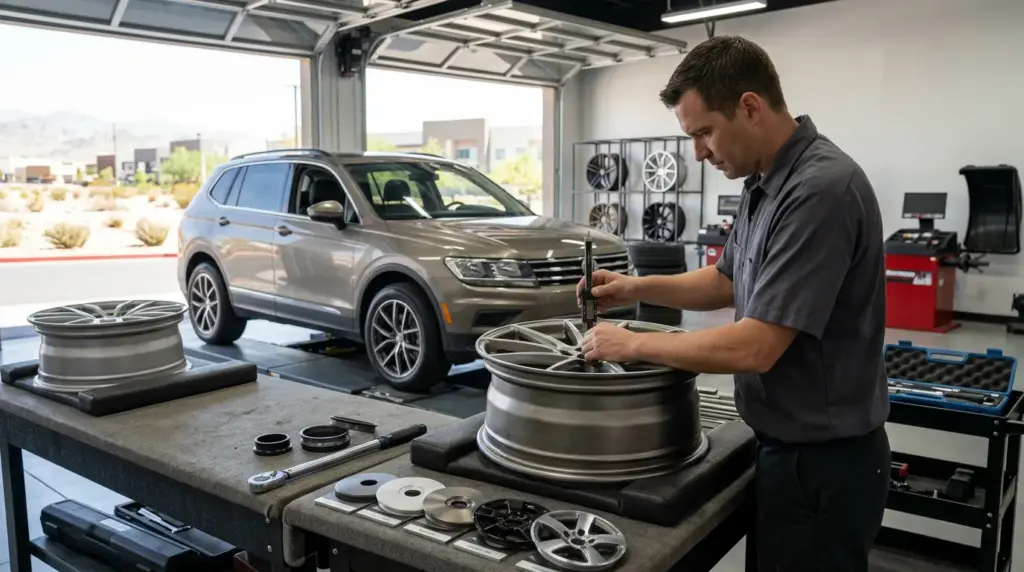
You can bring this checklist to a custom wheels and tires consultation at Dipped Auto Works.
Custom Wheels and Rims in Henderson, NV: 7 Frequently Asked Questions
1. How do I know what size custom wheels fit my car?
The correct size depends on your vehicle’s make, model, trim, suspension, and brake package.
A fitment check should include wheel diameter, width, offset, bolt pattern, center bore, load rating, and tire dimensions.
The installer should also confirm clearance around brakes, suspension, and fenders.
Don’t rely only on the wheel diameter or a photograph of a similar vehicle.
2. Will larger rims make my ride less comfortable?
They can, especially if larger wheels require lower-profile tires with shorter sidewalls.
Less sidewall height may make bumps more noticeable.
The result depends on the tire model, wheel weight, suspension, inflation pressure, and vehicle.
Ask about a wheel and tire combination that suits both your appearance goals and comfort preferences.
3. What is the difference between wheel offset and backspacing?
Offset measures the position of the wheel’s mounting surface relative to its centerline, usually in millimeters.
Backspacing measures the distance from the mounting surface to the inner wheel edge, usually in inches.
Both describe wheel position and clearance.
A proper fitment check may use both measurements.
4. Are forged wheels better than cast wheels?
Not automatically.
Forged, cast, and flow-formed wheels use different manufacturing methods.
Their weight, strength, and durability depend on design, materials, testing, and manufacturing.
A well-made cast wheel may be suitable for many everyday applications.
Compare the wheel’s actual specifications and vehicle compatibility before deciding.
5. Which custom wheel finish is easiest to maintain in Henderson, NV?
Many painted and clear-coated finishes can be maintained with gentle, regular washing.
Gloss black may show dust and fine marks readily.
Matte finishes should not be polished without manufacturer approval.
Polished metal and chrome may require different cleaning methods.
Choose a finish you like and follow its specific care instructions.
6. Do I need new tires when installing custom rims?
Not always.
You may be able to reuse existing tires if their diameter matches the new wheels, the rim width is approved, and the tires remain in suitable condition.
If you change wheel diameter or width, new tires may be necessary.
The installer should verify size, load rating, tread condition, and other compatibility requirements before mounting.
7. Where can I get custom wheels and rims near Henderson, NV?
You can schedule a wheel and tire consultation at Dipped Auto Works, located at 4305 Dean Martin Dr #120, Las Vegas, NV 89103.
Our shop serves vehicle owners from Henderson, NV, and surrounding communities.
We offer custom wheel and rim options, tire installation, balancing, alignment services, and related vehicle customization.
Call (702) 379-8716 or visit our contact page to schedule an appointment.
Schedule Custom Wheels and Rims Near Henderson, NV, at Dipped Auto Works
A new set of wheels can give your vehicle a completely different appearance.
But the right setup involves more than choosing a color and spoke design.
Wheel diameter, width, offset, bolt pattern, center bore, load rating, and tire compatibility all need to be checked.
The finish matters too.
Gloss black, matte, satin, machined, polished, and chrome wheels each create a different look and may require different maintenance.
At Dipped Auto Works, we help owners from Henderson, NV, select custom wheel and tire packages that suit their vehicles and style preferences.
Our certified team offers:
- Custom Wheels and Rims
- Wheel and Tire Installation
- Wheel Balancing
- Alignment Services
- Performance Tire Options
- All-Terrain Tire Options
- Custom Suspension
- Vehicle Customization
- Auto Detailing
We also carry warranties on our products and services. Ask about the manufacturer and installation coverage that applies to your chosen wheels.
Whether you’re changing the wheels on a Tesla, planning a sportier look for your BMW, or selecting rims for a truck or SUV, our team can help you review the fitment requirements.
Contact Dipped Auto Works
Business Name: Dipped Auto Works
Address: 4305 Dean Martin Dr #120, Las Vegas, NV 89103
Phone: (702) 379-8716
Business Hours: Monday through Saturday, 9 AM to 6 PM
Website: www.dippedautoworks.com
Schedule an Appointment: Contact Dipped Auto Works
Ready to find wheels that look great and fit correctly?
Call (702) 379-8716 or fill out our contact form to request a custom wheel and rim consultation.
Tell us your vehicle’s year, make, model, and trim, along with the wheel style or finish you’re interested in.
Our team can help you compare wheel sizes, tire options, clearances, and finishes before you make your choice.
Sources and References
The following references support the wheel fitment, tire compatibility, offset, installation, finish care, and local service information discussed in this guide.
1. We Find Out What Fits So You Can Install With Confidence
- Publisher: Tire Rack
- Publication Date: Not listed
- URL: https://www.tirerack.com/upgrade-garage/we-find-out-what-fits-so-you-can-install-with-confidence
2. What Is Wheel Offset?
- Publisher: Tire Rack
- Publication Date: Not listed
- URL: https://www.tirerack.com/upgrade-garage/what-is-wheel-offset
3. How Do I Measure Wheel Bolt Pattern?
- Publisher: Tire Rack
- Publication Date: Not listed
- URL: https://www.tirerack.com/upgrade-garage/how-do-i-measure-wheel-bolt-pattern
4. What Are Plus Size Wheels and Tires?
- Publisher: Tire Rack
- Publication Date: Not listed
- URL: https://www.tirerack.com/upgrade-garage/what-are-plus-size-wheels-tires-2
5. How Do I Check My Tire Specifications?
- Publisher: Tire Rack
- Publication Date: Not listed
- URL: https://www.tirerack.com/upgrade-garage/how-do-i-check-my-tire-specs
6. Tire Safety Ratings and Awareness
- Publisher: National Highway Traffic Safety Administration
- Publication Date: Not listed; current online consumer safety guidance
- URL: https://www.nhtsa.gov/vehicle-safety/tires
7. How Do I Clean My Wheels?
- Publisher: Tire Rack
- Publication Date: Not listed
- URL: https://www.tirerack.com/upgrade-garage/how-do-i-clean-my-wheels
8. How Do I Properly Torque My Wheel Lug Nuts or Bolts?
- Publisher: Tire Rack
- Publication Date: Not listed
- URL: https://www.tirerack.com/upgrade-garage/how-do-i-properly-torque-my-wheel-lug-nuts-or-bolts
9. TS9 Wheel Specifications and MAT Technology
- Publisher: Enkei Wheels
- Publication Date: Not listed
- URL: https://enkei.com/shop/wheels/tuning/ts9/
10. Custom Wheels and Tires
- Publisher: Dipped Auto Works
- Publication Date: Not listed
- URL: https://dippedautoworks.com/services/wheels-tires/
11. Custom Wheels and Tires in Las Vegas, NV
- Publisher: Dipped Auto Works
- Publication Date: Not listed
- URL: https://dippedautoworks.com/service/custom-wheels-and-tires-in-las-vegas-nv/
12. Custom Suspension
- Publisher: Dipped Auto Works
- Publication Date: Not listed
- URL: https://dippedautoworks.com/services/custom-suspension/
Best Color Change Wraps in Las Vegas, NV: A Comprehensive Guide

Discover the best color change wraps in Las Vegas, NV, with Dipped Auto Works. From choosing the perfect color to expert installation, learn how to transform your car with a vinyl wrap that suits your style and protects your vehicle. Call (702) 379-8716 to schedule your consultation today!
Product Brand: Dipped Auto Works
5
Pros
- Discover the best color change wraps in Las Vegas, NV, with Dipped Auto Works. From choosing the perfect color to expert installation, learn how to transform your car with a vinyl wrap that suits your style and protects your vehicle. Call (702) 379-8716 to schedule your consultation today!
