
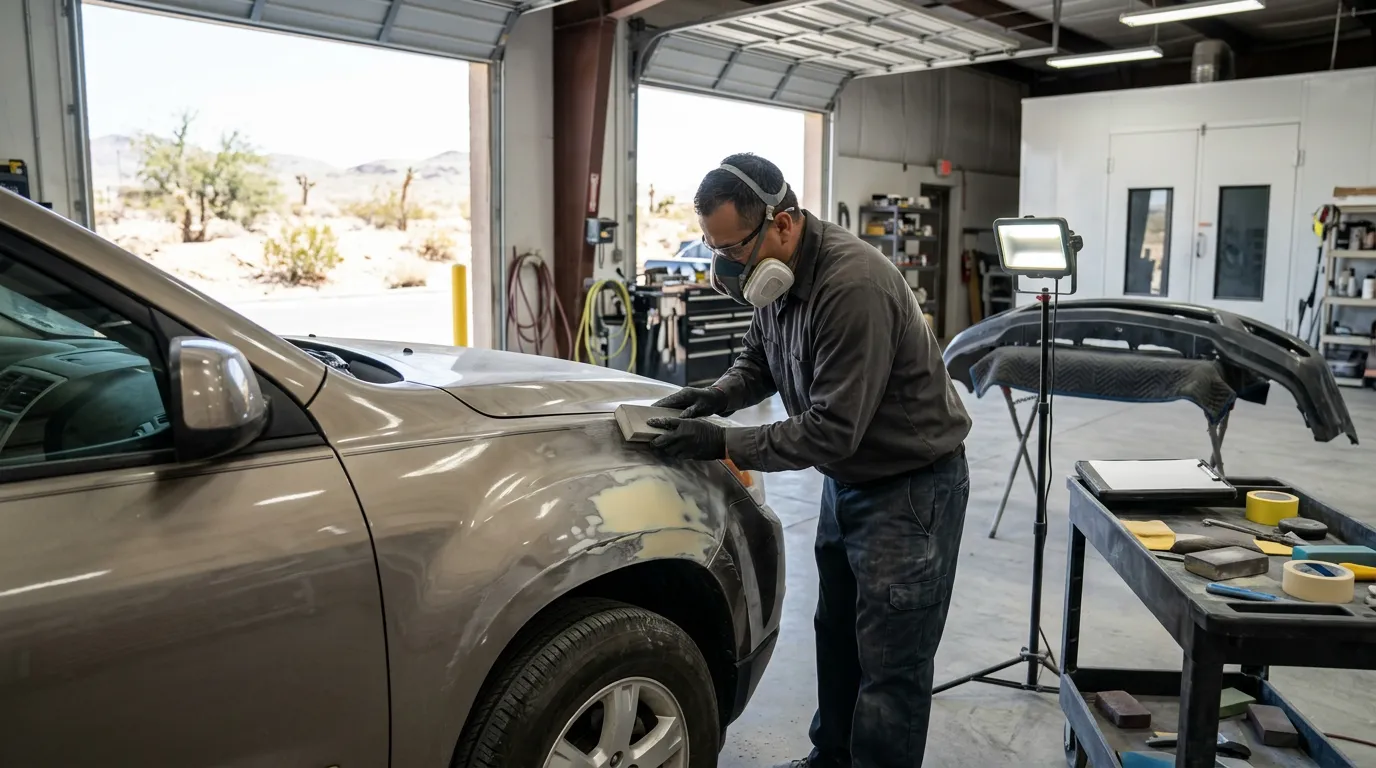
Collision Repair Near Nellis Air Force Base, NV, is something you may need after a parking lot accident, rear-end collision, damaged bumper, or more serious crash. Seeing dents, broken lights, or scratched paint on your vehicle is frustrating enough. Then come the questions about insurance, hidden damage, replacement parts, repair timelines, and whether your car will feel the same once the work is finished.
A professional body shop does more than repair visible damage. Depending on the accident, collision repair can involve structural inspections, frame measurements, body panel replacement, paint matching, electronic diagnostics, and safety-system checks. Understanding these steps helps you know what to expect before leaving your vehicle with a repair facility.
For vehicle owners living or working near Nellis Air Force Base, NV, finding a dependable body shop is especially helpful when you need transportation for daily responsibilities, commuting, or family activities. You want clear communication, a careful inspection, and an explanation of the repairs your vehicle needs.
At Dipped Auto Works, we provide professional collision repair services for vehicle owners throughout Las Vegas, NV, including those coming from the Nellis Air Force Base area. Our certified team handles everything from minor body damage to more involved structural and paint repairs, with warranty-backed workmanship.
Here’s what to expect when you bring your vehicle to a collision repair shop.
Table of Contents
- What Does a Collision Repair Body Shop Do?
- What to Do Immediately After an Accident
- Step 1: Initial Collision Damage Inspection
- Step 2: Repair Estimates and Insurance Claims
- Step 3: Hidden Damage and Vehicle Disassembly
- Step 4: Structural and Frame Repairs
- Step 5: Body Panel Repair and Replacement
- Step 6: Paint Matching and Refinishing
- Step 7: Sensors, Cameras, and Safety Checks
- Step 8: Reassembly and Final Inspection
- How Long Does Collision Repair Take?
- How to Choose a Body Shop Near Nellis AFB
- What to Check Before Picking Up Your Vehicle
- Protecting Your Vehicle After Collision Repair
- Collision Repair Frequently Asked Questions
- Schedule Collision Repair With Dipped Auto Works
- Sources and References
What Does a Collision Repair Shop Near Nellis Air Force Base, NV, Actually Do?
A collision repair shop restores damaged vehicle components after an accident, impact, or other event that affects the body or related systems.
The work can range from fixing a scratched bumper to replacing damaged body panels or repairing structural components.
According to the Nevada Legislature’s automotive repair statutes, body shops must follow applicable manufacturer specifications and the repair agreement most recently approved by the person authorizing the work.
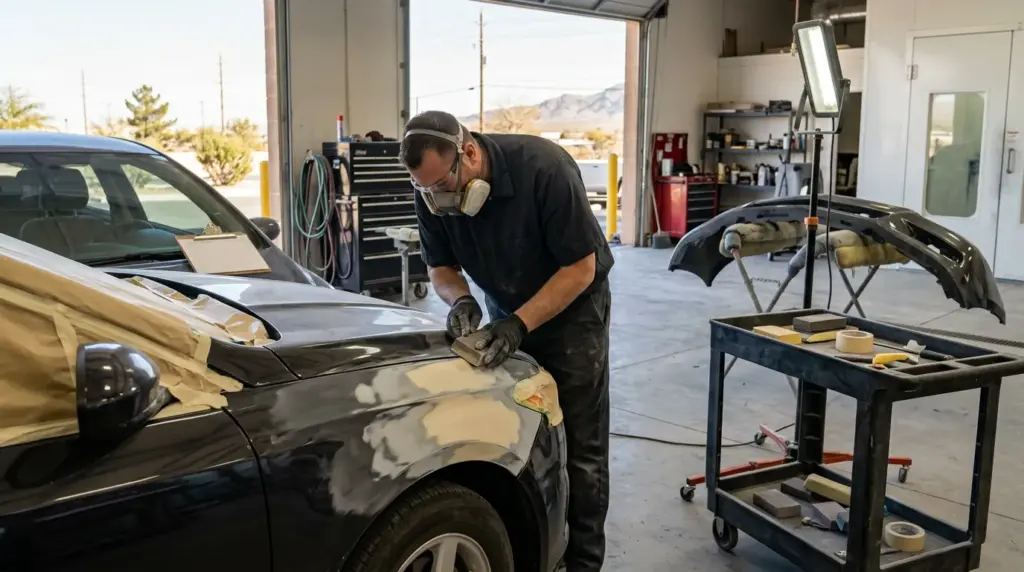
This matters because a vehicle’s appearance is only part of a complete repair.
Common Collision Repair Services
Depending on the damage, a body shop may perform:
- Bumper repair or replacement
- Fender and door repairs
- Hood and trunk repairs
- Dent removal
- Quarter panel repair
- Structural measurements
- Frame straightening when permitted by the vehicle manufacturer
- Replacement of damaged exterior components
- Paint matching and refinishing
- Exterior trim and lighting replacement
- Safety-system inspections
- Electronic diagnostics and calibration coordination
- Final panel alignment and finish inspection
At Dipped Auto Works, our auto body repair shop services include dent repair, bodywork, frame repair, and paint restoration.
Is Collision Repair Different From Regular Auto Repair?
Yes.
A mechanical repair shop generally focuses on systems such as the engine, transmission, brakes, and other mechanical components.
A collision repair shop focuses on damage caused by impacts and accidents.
There can be overlap.
A collision may damage suspension components, wiring, sensors, cooling systems, or other mechanical parts.
The body shop should identify those concerns and explain whether the work will be completed at its facility or coordinated with a qualified specialist.
What Should You Do After a Collision Near Nellis Air Force Base, NV?
Before thinking about repairs, focus on safety.
If anyone is injured, seek emergency assistance. Follow law enforcement instructions and move to a safer location only when it is safe and lawful to do so.
A damaged vehicle may not be safe to operate, even when the exterior damage looks minor.
Document the Accident
Once everyone is safe, collect information that may help with your insurance claim and repair inspection.
This can include:
- Photos of the damaged vehicle
- Images of the accident scene when safe
- Contact and insurance information for the involved parties
- The location and date of the accident
- Any police report or incident number
- Photos of damaged lights, wheels, and body panels
Keep copies of relevant documents for your records.
Check Whether Your Vehicle Needs Towing
Avoid operating a vehicle that has:
- Fluid leaking from damaged components
- A wheel that appears bent or out of position
- Damaged steering or suspension
- A tire rubbing against bodywork
- Broken or unsecured body panels
- Serious structural damage
- Warning lights suggesting a safety-system concern
If you’re unsure whether the vehicle is safe, arrange an inspection or appropriate towing assistance instead of taking the risk.
Contact Your Insurance Provider
Notify your insurer when required by your policy.
Ask what information it needs, how the claim will be inspected, and whether any repair authorization is necessary.
You can also contact a body shop to discuss an inspection.
At Dipped Auto Works, we assist customers with insurance-related collision repair documentation and work with many major insurance providers.
Step 1: Initial Collision Damage Inspection
The first major stage of collision repair near Nellis Air Force Base, NV, is assessing the vehicle’s condition.
A technician looks at the areas affected by the accident and identifies visible damage.
The inspection helps establish the initial repair plan.
What Does a Collision Repair Inspection Include?
Depending on the accident, the technician may review:
- Front and rear bumpers
- Hood and fenders
- Doors and quarter panels
- Trunk or liftgate
- Exterior lights
- Panel gaps and alignment
- Wheels and tires
- Suspension areas near the impact
- Glass and mirrors
- Visible structural components
- Dashboard warning messages
The shop should also ask about anything unusual you’ve noticed since the accident.
A new vibration, unusual sound, or door that doesn’t close correctly may provide useful information.
Can Minor Damage Hide Bigger Problems?
Yes.
A bumper cover can look only slightly scratched while mounting clips, brackets, reinforcement components, or sensors behind it have been damaged.
A side impact may affect a door’s internal components or mounting points.
That’s why a visual inspection is sometimes only the beginning.
Some damage becomes apparent after the technician removes affected components.
What to ask: “Can you explain which damage is visible now and which areas may need a closer inspection?”
Step 2: Collision Repair Estimates and Insurance Claims
After the initial inspection, the shop prepares a repair estimate describing the work identified so far.
A detailed estimate helps you understand the planned repairs before authorizing them.
It can also help your insurer review the claim.
What Should a Collision Repair Estimate Include?
A written repair estimate commonly identifies:
- Damaged body panels
- Components that need repair
- Parts that may need replacement
- Structural inspection or repair requirements
- Refinish and paint work
- Diagnostic and calibration operations when required
- Other repair-related procedures
The Federal Trade Commission’s Auto Repair Basics guide recommends getting a written estimate that identifies the condition being repaired, needed parts, and planned labor.
Nevada also has specific automotive repair estimate and authorization requirements under NRS Chapter 487.
Can You Choose Your Own Body Shop in Nevada?
Yes.
Under Nevada Revised Statutes NRS 690B.016, an insured person or claimant can choose a licensed body shop for vehicle repairs.
The law also states that insurers cannot require customers to use one licensed body shop instead of another.
Insurance payment obligations still depend on the policy and applicable claim rules.
If your insurance provider recommends a repair facility, you can ask about using a different licensed shop.
Does the Body Shop Work With Insurance Companies?
Many collision repair shops communicate with insurers during the repair process.
Dipped Auto Works states that it works with most major insurance providers and assists with claim paperwork.
The insurer still determines claim coverage and applicable approvals.
Before authorizing repairs, ask who will communicate with the adjuster and how changes to the repair plan will be handled.
What If Additional Repairs Become Necessary?
An initial inspection cannot always reveal every damaged component.
If the shop finds more damage during disassembly, it may need to update the repair plan.
This is often called a repair supplement.
Nevada has rules about notifying the vehicle owner and insurer when certain additional work goes beyond an approved estimate. Written waivers and authorization requirements can affect the procedure.
Ask the shop to explain any changes before the new work begins.
Step 3: Checking for Hidden Collision Damage
Hidden damage is one reason a body shop may need more time than a quick visual estimate suggests.
Once damaged exterior components are removed, technicians can inspect areas that weren’t visible during the first appointment.
What Can Be Hidden Behind a Bumper?
A bumper assembly may contain:
- Reinforcement components
- Energy-absorbing materials
- Mounting brackets
- Parking sensors
- Radar units on equipped vehicles
- Wiring and connectors
- Impact-related structural components
Damage to these parts may not be obvious from the outside.
Say your rear bumper has a shallow dent after a parking lot collision.
The painted cover might be repairable, but the supporting parts behind it could also require inspection.
A proper repair plan should consider both.
Why Does Disassembly Matter?
Removing selected components allows technicians to examine the affected area more closely.
The shop can then determine whether parts should be repaired, replaced, or inspected further under the manufacturer’s instructions.
Not every collision requires extensive disassembly.
The amount depends on where the vehicle was struck and the suspected damage.
What Happens When Hidden Damage Is Found?
The repair shop should document what it discovers.
If the work changes, the shop should explain the revised repair plan and obtain any necessary approvals.
Additional damage may affect parts ordering, scheduling, or the operations required before reassembly.
Here’s what matters: A dent that looks small on the outside doesn’t always tell you what happened behind the panel.
Step 4: Structural and Frame Repair After a Collision
Some accidents affect more than removable exterior panels.
A stronger impact can change the shape or position of structural components.
These repairs require careful measurements and vehicle-specific procedures.
What Is Structural Collision Damage?
Structural damage affects components that contribute to the vehicle’s body structure and crash performance.
Depending on vehicle construction, this can involve sections of the unibody, frame rails, pillars, floor structure, or reinforcement areas.
You cannot always identify structural damage simply by looking at the exterior.
How Does a Body Shop Check Vehicle Structure?
Technicians may use measurements and specialized equipment to compare the vehicle’s condition with manufacturer specifications.
This helps determine whether an affected area is within the required tolerances.
Modern vehicles can contain high-strength steel, aluminum, and other materials that require different repair methods.
A repair method suitable for one vehicle may not be approved for another.
Can a Bent Frame Be Repaired?
Some structural damage can be repaired using manufacturer-approved methods.
Other components may require replacement rather than straightening.
The answer depends on the vehicle, material, damaged area, and applicable repair procedures.
Dipped Auto Works offers collision and structural repair services, including frame straightening when appropriate.
Ask our team to inspect the damage and explain the repair plan for your vehicle.
Why Manufacturer Specifications Matter
A body shop should follow repair instructions for the vehicle’s make, model, and production year.
Those instructions may cover how a component can be repaired, where sections can be joined, and which equipment is required.
Nevada’s NRS 487.688 requires covered vehicle repairs to follow manufacturer specifications and the approved repair agreement.
Step 5: Body Panel Repair or Replacement
Not every damaged panel needs to be replaced.
Some dents, scratches, and other forms of body damage can be repaired while keeping the existing part.
Other damage may call for replacement.
When Can a Body Panel Be Repaired?
Repair may be appropriate when the damage is within the manufacturer’s approved repair limits.
The technician considers the material, depth of damage, shape of the panel, and surrounding components.
A shallow dent on a suitable metal panel may be repairable.
Severe deformation, cracking, damage near certain structural sections, or compromised mounting areas may make replacement necessary.
When Does Replacement Make More Sense?
Replacement may be required if a component cannot be restored using an approved method.
Common examples can include:
- Severely cracked bumper covers
- Broken headlight housings
- Damaged mounting tabs
- Panels with deformation beyond repair limits
- Components the manufacturer identifies as nonrepairable
The repair plan should explain why a part is being replaced rather than repaired.
What About OEM and Aftermarket Parts?
OEM parts are supplied through the vehicle manufacturer’s parts system.
Aftermarket replacement parts are produced by other companies.
Recycled parts may also be considered in some repair situations.
Suitability depends on the component, vehicle manufacturer requirements, condition, and claim details.
Ask your body shop which parts are planned and whether the vehicle manufacturer has restrictions for the damaged area.
Don’t assume every replacement part is interchangeable, especially around structural or safety-related components.
Step 6: Paint Matching and Refinishing After Collision Repair
Once the damaged panels have been repaired or replaced, the vehicle may need refinishing.
This is the stage that brings the repaired area closer to the appearance of the surrounding paint.
A good paint match involves more than choosing a paint color by name.
Why Is Automotive Paint Matching Difficult?
Vehicle paint colors can have different variations.
Even cars with the same factory color code may show differences due to paint production variations, aging, previous repairs, or surface condition.
Metallic and pearl finishes can be more demanding because their appearance changes under different lighting and viewing angles.
How Does a Body Shop Match Paint?
A technician may use the factory paint code, color samples, matching tools, and test panels.
The goal is to select a suitable formula and application method for the repaired area.
Depending on the vehicle, blending paint into an adjacent panel may help reduce visible differences.
Dipped Auto Works provides paint matching and refinishing services as part of its body shop work.
What Happens During Refinishing?
The work may include:
- Preparing the repaired panel.
- Applying approved undercoat materials.
- Preparing the surface for paint.
- Applying the selected color.
- Applying clear coat as required.
- Allowing the finish to cure according to product instructions.
- Inspecting the repaired surface.
The precise steps depend on the materials and repair procedure.
Will Repaired Paint Look Exactly Like Factory Paint?
Professional refinishing aims for a close visual match.
The finished appearance depends on paint selection, application, surrounding paint condition, and the original finish.
Ask the shop to explain any differences that may remain before accepting the completed repair.
Step 7: Sensors, Cameras, and Safety-System Checks
Modern vehicles may have electronic systems that need attention after a collision.
A repaired bumper can look perfect while a sensor behind it still requires inspection.
That’s why collision repair near Nellis Air Force Base, NV, may involve electronic diagnostics in addition to bodywork.
What Is ADAS?
Advanced Driver Assistance Systems, or ADAS, include features such as:
- Automatic emergency braking
- Adaptive cruise control
- Lane departure warning
- Lane keeping assistance
- Blind spot monitoring
- Parking assistance
- Surround-view cameras
These systems may rely on cameras, radar units, ultrasonic sensors, and other vehicle equipment.
Their location and repair requirements vary between models.
Why Might a Vehicle Need Scanning?
A diagnostic scan can reveal stored fault codes or electronic concerns that aren’t visible during a body inspection.
According to I-CAR’s Collision Repair Diagnostics Definitions, pre-repair scans help identify existing diagnostic trouble codes, while post-repair scans help identify and assess codes related to the collision or repair work.
Scans alone do not replace physical inspections or required calibrations.
What Is ADAS Calibration?
Calibration is a procedure used to set or verify certain electronic systems according to the manufacturer’s requirements.
It may be needed after removing, replacing, or repairing sensors, cameras, mounting points, or surrounding components.
The OEM Collision Repair Roundtable explains why scans and calibrations matter during modern collision repair.
Not every collision requires the same procedures.
Ask the shop whether your vehicle needs calibration and whether that work will be performed at the facility or arranged with a qualified provider.
What About Airbags and Seat Belts?
Airbags, seat belt pretensioners, and related safety systems may need inspection after certain accidents.
A deployed airbag cannot simply be pushed back into place.
The vehicle manufacturer’s instructions determine the necessary inspections and replacement procedures.
If your vehicle’s restraint system has been affected, ask the shop to explain how that repair will be addressed.
Step 8: Reassembly and Final Collision Repair Inspection
After the bodywork and refinishing are completed, the vehicle moves toward reassembly.
This stage involves reinstalling or replacing the components removed during repair.
The shop then checks the finished work.
What Happens During Reassembly?
Depending on the repair, technicians may reinstall:
- Bumper assemblies
- Exterior trim
- Headlights and taillights
- Grilles
- Door components
- Mirrors
- Interior panels
- Sensors and wiring
- Other removed equipment
Components should fit correctly and operate as intended.
What Should the Final Inspection Cover?
A final repair inspection may include:
- Paint appearance
- Panel alignment
- Door and hood operation
- Trunk or liftgate fitment
- Exterior lighting
- Trim attachment
- Electronic warning messages
- Required diagnostic results
- Required calibration records
- Wheel alignment or road testing when applicable
The inspection should reflect the damage repaired and the manufacturer’s instructions.
Should You Review the Vehicle Before Pickup?
Yes.
Ask the body shop to walk you through the repaired areas and explain the completed work.
You should also understand which parts were replaced, whether any additional repairs were discovered, and what warranty applies.
How Long Does Collision Repair Near Nellis Air Force Base, NV, Take?
Collision repair timelines vary widely.
A small cosmetic repair may require less work than a collision involving structural damage, replacement parts, and safety-system calibration.
The initial repair schedule is an estimate, not a guarantee.
What Can Affect the Repair Schedule?
Common factors include:
- Severity of vehicle damage
- Hidden damage found during disassembly
- Parts availability
- Manufacturer repair requirements
- Insurance review or authorization
- Structural measurements
- Refinishing and paint curing
- Electronic diagnostics
- ADAS calibration
- Final inspection findings
Why Can Parts Availability Delay Repairs?
Some replacement parts may need to be ordered.
Availability can vary by manufacturer, model year, and component.
A vehicle may also require additional parts after hidden damage is discovered.
The body shop should explain these changes when they affect the expected completion date.
Can Insurance Reviews Affect the Schedule?
Yes.
If the insurer needs additional documentation or approval after new damage is discovered, the repair plan may be affected.
Ask the shop how it communicates changes and when you should expect updates.
Should You Arrange Temporary Transportation?
If you rely on your vehicle for work or family responsibilities, ask your insurer whether your policy or claim includes rental vehicle benefits.
Coverage and arrangements depend on the circumstances of the claim.
You can also ask the body shop about its expected repair schedule so you can plan accordingly.
How to Choose a Collision Repair Shop Near Nellis Air Force Base, NV
Choosing a body shop shouldn’t come down to photographs of finished cars alone.
You want to know how the shop inspects damage, handles repairs, communicates with insurers, and checks the vehicle before returning it.
Look for a Licensed Body Shop
Nevada requires body shops to hold the appropriate state license.
Ask the facility about its Nevada DMV body shop license.
You can review Nevada’s licensing requirements under NRS Chapter 487.
Professional training and additional certifications can also be worth discussing.
A general certification claim shouldn’t be confused with manufacturer-specific collision repair approval or Nevada’s separate Class A certification designation.
Ask About Manufacturer Repair Procedures
The body shop should be able to explain how it obtains the repair information needed for your vehicle.
This matters for structural repairs, sensors, advanced materials, and safety equipment.
Ask whether specialty work will be performed at the shop or coordinated with another qualified facility.
Review Customer Feedback
Customer reviews can help you understand how a shop communicates and handles concerns.
Look for comments about completed bodywork, paint matching, insurance communication, and follow-up service.
Don’t judge a facility only by one review.
Ask About Workmanship Warranties
A collision repair warranty should explain what is covered and how warranty service is handled.
At Dipped Auto Works, our collision repair services include warranty-backed workmanship.
Ask for the written terms associated with your specific repairs.
Consider the Shop’s Actual Location
If you’re looking for collision repair near Nellis Air Force Base, NV, make sure you know where the repair facility is located.
Dipped Auto Works serves customers coming from the base area, but our shop is located at 4305 Dean Martin Dr #120, Las Vegas, NV 89103.
We are not an on-base collision repair facility.
Contact our team to discuss inspection appointments, vehicle drop-off arrangements, and your repair needs.
What to Check Before Picking Up Your Repaired Vehicle
Once your collision repair is complete, give yourself an opportunity to inspect the vehicle.
You don’t need to be an automotive technician to ask useful questions.
Exterior Appearance Checklist
- The repaired paint appears consistent with nearby panels.
- Panel gaps look even.
- Doors, hood, and trunk close normally.
- Bumper covers and trim appear properly attached.
- Headlights and taillights are secure.
- The repaired area has no obvious unfinished surfaces.
- Exterior mirrors are properly positioned and functional.
Vehicle Function Checklist
- There are no unexplained new warning messages.
- Windows and locks work normally.
- Interior switches affected by the repair operate correctly.
- Parking sensors or cameras affected by the collision have been checked.
- Required diagnostic and calibration work has been documented.
- Any remaining concerns have been explained.
Paperwork Checklist
- You received a final repair summary.
- Replaced parts and completed operations are identified.
- Any additional approved repairs are documented.
- Applicable warranty terms are available.
- Paint care instructions have been explained.
- You know whom to contact if a concern appears later.
If something doesn’t seem right, bring it to the shop’s attention before leaving.
How to Protect Your Vehicle After Collision Repair
After the body and paint repairs are complete, you may want to think about preserving the finish.
This is especially relevant when your vehicle has received new paint.
Follow Fresh Paint Care Instructions
Recently refinished surfaces may have special washing, polishing, and product-application restrictions.
Ask the body shop which paint materials were used and what curing guidance applies.
Avoid applying wax, sealants, film, or coating products to freshly refinished panels before the appropriate waiting period has passed and the refinisher has approved them.
Consider Paint Protection Film
Once the paint is fully ready for protective film under the applicable repair and film-manufacturer instructions, paint protection film may help protect selected surfaces from future rock chips and minor abrasion.
Common areas include the hood, bumper, and front fenders.
Ask About Ceramic Coating
Ceramic coating is another option after the repaired finish is suitable for treatment.
A compatible coating can help make routine cleaning easier and improve water repellency.
It does not replace the physical rock chip protection of PPF.
Keep Up With Regular Detailing
Gentle washing and appropriate exterior care help preserve the repaired finish.
Dipped Auto Works also offers auto detailing services for vehicle owners who want professional cleaning and ongoing care.
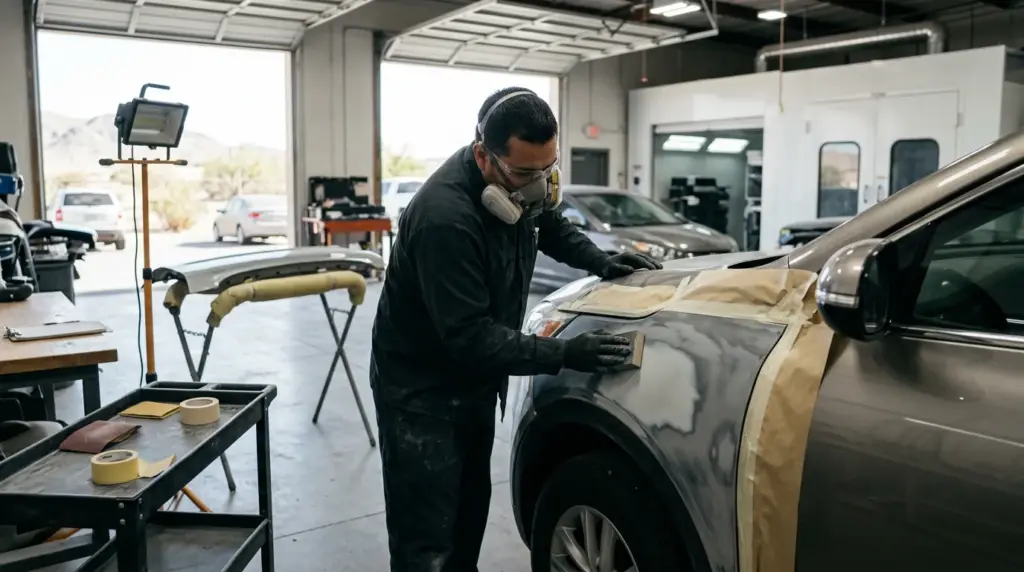
Be sure to tell the detailer about any recently refinished panels.
Collision Repair Near Nellis Air Force Base, NV: 7 Frequently Asked Questions
1. What types of collision damage can a body shop repair?
A professional body shop can assess a range of accident-related damage, including dents, scratched paint, damaged bumpers, broken exterior components, and more involved body or structural concerns.
Not every damaged component can be repaired.
The technician should inspect your vehicle and follow applicable manufacturer repair instructions.
Dipped Auto Works offers collision repair, bodywork, frame repair, paint matching, and refinishing services.
2. Can I choose my own collision repair shop in Nevada?
Yes. Nevada Revised Statutes NRS 690B.016 states that insured motorists and claimants may choose a licensed body shop for vehicle repairs.
An insurer cannot require you to use one licensed shop over another.
Claim payment remains subject to the policy and applicable rules.
Ask your insurance provider how to proceed with your preferred repair facility.
3. Do I need an insurance claim before scheduling collision repair?
Not necessarily.
You can contact a body shop to discuss damage inspection and repair options.
Whether an insurance claim is appropriate depends on your policy and circumstances.
If you plan to make a claim, contact the insurer about its documentation and approval requirements.
Dipped Auto Works can help you understand the repair steps and discuss insurance coordination.
4. Why does a collision repair estimate sometimes change?
Some damage isn’t visible until body panels or other components are removed.
The technician may discover damaged brackets, reinforcement components, sensors, or structural areas during disassembly.
These findings may require a revised repair plan.
The shop should document the changes and obtain required approvals under Nevada’s repair authorization rules.
5. Will my car need sensor calibration after collision repair?
Possibly.
Vehicles with cameras, radar, parking sensors, or other assistance systems may require diagnostic scans, inspections, or calibration after certain repairs.
Requirements depend on the vehicle and damaged components.
Ask your body shop whether calibration is needed and how the work will be completed and documented.
6. How do I know whether my vehicle is safe after collision repair?
The shop should complete the inspections, repairs, diagnostic procedures, and checks required for the damage and vehicle model.
You can ask to review the completed repair summary, relevant scan or calibration records, and any remaining concerns.
A smooth-looking paint finish alone doesn’t confirm that every affected system has been checked.
Discuss anything unusual with the shop before pickup.
7. Where can I schedule collision repair near Nellis Air Force Base, NV?
You can schedule a collision repair consultation with Dipped Auto Works, located at 4305 Dean Martin Dr #120, Las Vegas, NV 89103.
Our certified team provides bodywork, collision repair, frame repair, paint restoration, and related services for customers from the Nellis Air Force Base, NV, area.
Call (702) 379-8716 or visit our contact page to request an appointment.
Schedule Collision Repair Near Nellis Air Force Base, NV, With Dipped Auto Works
Dealing with vehicle damage after an accident can be stressful.
You may be looking at a scratched bumper, a damaged door, broken lighting, or a more complicated repair involving structural components.
The best place to start is with a careful inspection.
A professional body shop should explain what is damaged, which repairs may be needed, how hidden damage will be handled, and what inspections are required before the vehicle is returned.
At Dipped Auto Works, we help motorists coming from Nellis Air Force Base, NV, and throughout Las Vegas, NV, understand their collision repair options.
Our certified team provides:
- Collision Repair
- Car Accident Repair
- Auto Body Repair
- Body Shop Services
- Frame and Structural Repair
- Dent and Bumper Repair
- Automotive Paint Matching
- Vehicle Refinishing
- Paint Correction
- Paint Protection Film
We work with most major insurance providers and offer warranty-backed collision repair workmanship.
Whether your vehicle needs cosmetic bodywork or a more involved repair assessment, our team can discuss its condition and explain the available next steps.
Contact Dipped Auto Works
Business Name: Dipped Auto Works
Address: 4305 Dean Martin Dr #120, Las Vegas, NV 89103
Phone: (702) 379-8716
Business Hours: Monday through Saturday, 9 AM to 6 PM
Website: www.dippedautoworks.com
Schedule an Appointment: Contact Dipped Auto Works
Need help with collision damage?
Call (702) 379-8716 or fill out our contact form to request a collision repair consultation.
Tell us your vehicle’s year, make, and model, where the damage occurred, and whether you’ve already contacted your insurance provider.
Our team will help you understand the inspection process and discuss the repairs your vehicle may need.
Sources and References
The following sources support the information about Nevada automotive repair rights, insurance claim procedures, collision diagnostics, manufacturer repair requirements, local geography, and Dipped Auto Works services.
1. NRS 690B.016: Right to Choose a Licensed Body Shop
- Publisher: Nevada Legislature
- Publication Date: Originally added in 1989; amended through 2005
- URL: https://www.leg.state.nv.us/NRS/NRS-690B.html#NRS690BSec016
2. NRS Chapter 487: Repair, Removal and Disposal of Vehicles
- Publisher: Nevada Legislature
- Publication Date: Consolidated state statutes; individual sections have different amendment dates
- URL: https://www.leg.state.nv.us/NRS/NRS-487.html
3. Auto Repair Basics
- Publisher: Federal Trade Commission
- Publication Date: Not stated on the referenced consumer guide
- URL: https://consumer.ftc.gov/articles/0211-auto-repair-basics
4. Collision Repair Diagnostics Definitions
- Publisher: I-CAR
- Publication Date: October 3, 2016; article validated in 2025
- URL: https://rts.i-car.com/crn-646.html
5. Pre- and Post-Scanning / Calibration
- Publisher: OEM Collision Repair Roundtable, Crash Repair Info
- Publication Date: Not listed
- URL: https://www.crashrepairinfo.com/scanning
6. Nellis Air Force Base Fact Sheet
- Publisher: United States Air Force
- Publication Date: July 12, 2012
- URL: https://www.nellis.af.mil/About/Fact-Sheets/Display/Article/284174/nellis-air-force-base/
7. Collision Repair
- Publisher: Dipped Auto Works
- Publication Date: Not listed
- URL: https://dippedautoworks.com/services/collision-repair/
8. Auto Body Repair Shop
- Publisher: Dipped Auto Works
- Publication Date: Not listed
- URL: https://dippedautoworks.com/services/auto-body-repair-shop/
9. Car Accident Repair
- Publisher: Dipped Auto Works
- Publication Date: Not listed
- URL: https://dippedautoworks.com/services/car-accident-repair/
Best Color Change Wraps in Las Vegas, NV: A Comprehensive Guide

Discover the best color change wraps in Las Vegas, NV, with Dipped Auto Works. From choosing the perfect color to expert installation, learn how to transform your car with a vinyl wrap that suits your style and protects your vehicle. Call (702) 379-8716 to schedule your consultation today!
Product Brand: Dipped Auto Works
5
Pros
- Discover the best color change wraps in Las Vegas, NV, with Dipped Auto Works. From choosing the perfect color to expert installation, learn how to transform your car with a vinyl wrap that suits your style and protects your vehicle. Call (702) 379-8716 to schedule your consultation today!
