
Window Tint in Enterprise, NV can help reduce glare, manage solar heat, add privacy, filter ultraviolet radiation, and change the appearance of your vehicle. Picking a film takes more thought than choosing the darkest shade on a sample board. Visible Light Transmission, heat rejection, film construction, factory glass, and Nevada law all play a part in the finished result.
Drivers shopping for Window Tint in Enterprise, NV often ask whether 35%, 20%, or 5% tint is right for their vehicle. Another common question is whether darker film blocks more heat. Those questions are connected, but they are not the same. Tint darkness measures how much visible light gets through. Heat rejection measures how the film handles solar energy.
Dipped Auto Works provides professional window tint with carbon and ceramic film choices. The shop uses certified installers and backs its tint packages with warranty coverage. This guide explains how tint shades work, how heat rejection is measured, what Nevada law says about different windows, and what to consider before choosing film.
Table of Contents
- What Does Window Tint Shade Mean?
- Understanding VLT for Window Tint
- Common Window Tint Shades
- Does Darker Tint Reject More Heat?
- How Heat Rejection Is Measured
- What Does TSER Mean?
- What Does Infrared Rejection Mean?
- Ceramic vs Carbon Window Tint
- Nevada Window Tint Limits
- Front Side-Window Tint in Nevada
- Rear Side and Rear Window Tint
- Nevada Windshield Tint Rules
- How Factory Glass Changes VLT
- Choosing Window Tint in Enterprise, NV
- Window Tint for Tesla Vehicles
- What to Expect During Installation
- Get Window Tint in Enterprise, NV
- Frequently Asked Questions
- Sources
Window Tint in Enterprise, NV: What Does Tint Shade Mean?
Window tint shade usually refers to how light or dark the film appears after it is installed.
The number attached to a film is commonly its Visible Light Transmission, or VLT. This percentage tells you how much visible light passes through a tested film or glass-and-film system.
A high VLT means more visible light passes through.
A low VLT means less visible light passes through.
This can feel backward the first time you shop for Window Tint in Enterprise, NV. A 70% film looks much lighter than a 20% film. A 5% film looks very dark because only a small amount of visible light passes through.
Shade affects appearance, privacy, glare, and nighttime visibility.
It does not tell you everything about solar heat rejection.
Understanding VLT for Window Tint in Enterprise, NV
VLT stands for Visible Light Transmission.
Think of it as the percentage of visible light that gets through.
A film with high VLT lets more daylight enter the cabin. A film with low VLT allows less visible light through.
That makes VLT useful when comparing privacy and appearance.
Here is a simple way to read tint percentages:
| Approximate VLT | General Appearance | Typical Reason for Considering It |
|---|---|---|
| 70% | Very light | Solar control with a light appearance |
| 50% | Light | Mild glare reduction and solar control |
| 35% | Medium | Noticeably tinted appearance |
| 20% | Dark | More privacy on windows where permitted |
| 5% | Very dark | High privacy on windows where permitted |
These descriptions are only a visual guide.
A film marketed as 35% does not mean your completed window will automatically measure exactly 35%.
Your factory glass matters too.
Common Shades for Window Tint in Enterprise, NV
Different film series come in different VLT choices. Not every manufacturer carries the same percentages.
70% Window Tint
A 70% film is relatively light.
This type of shade may appeal to drivers who want solar-control film without giving the glass a heavily darkened appearance.
Lighter ceramic films can still have useful heat-rejection properties. This is one reason drivers interested in cabin comfort should not shop by darkness alone.
50% Window Tint
A 50% film gives the glass a light tinted appearance while reducing more visible light than a 70% film.
Drivers may consider it when they want mild glare reduction while keeping outward visibility relatively bright.
35% Window Tint
A shade around 35% produces a much more noticeable tinted look.
Nevada’s front side-window rule also uses a 35% light-transmission figure, but there is a detail you should not miss.
Nevada law refers to the total light transmission through the combination of the transparent material and safety glazing.
The film’s advertised VLT and the finished window measurement are not always the same number.
20% Window Tint
A 20% film is dark and can add more privacy.
Whether it may be used depends on which window is being tinted and how Nevada law applies to that glass.
Do not assume that because a shade can be installed on rear glass it can also be used on the windows beside the driver.
5% Window Tint
A 5% film is very dark.
It allows only a small amount of visible light to pass through under the stated test conditions.
Dark film may provide more daytime privacy, but it can also make outward visibility harder after sunset or in poorly lit areas.
When comparing Window Tint in Enterprise, NV, think about how the vehicle will feel at night as well as how it will look during daylight.
Does Darker Window Tint in Enterprise, NV Reject More Heat?
Not always.
This is one of the biggest misconceptions about automotive tint.
A darker piece of film blocks more visible light than a lighter piece of film. That does not automatically mean it rejects more total solar energy than every lighter film.
Film construction matters.
A lighter ceramic product may have stronger solar-control figures than a darker film from another product family.
Here’s what matters: compare films using measured solar specifications rather than judging heat rejection from appearance alone.
For Window Tint in Enterprise, NV, three measurements are worth understanding:
- Visible Light Transmission, or VLT
- Total Solar Energy Rejection, or TSER
- Infrared Rejection, often listed as IRR
They measure different things.
How Heat Rejection Works With Window Tint in Enterprise, NV
Sunlight reaching your vehicle contains visible light, ultraviolet radiation, infrared energy, and other portions of the solar spectrum.
Window film can interact with that incoming energy by transmitting, absorbing, and reflecting different amounts.
Manufacturers publish test data so you can compare film products.
3M’s Automotive Window Film Ceramic IM Series gives a useful example. Its December 2025 technical sheet publishes separate values for:
- Visible Light Transmission
- UV blocking
- Total Solar Energy Rejection
- Glare reduction
- Infrared Rejection
- Infrared Energy Rejection
The figures change by shade.
This shows why a single percentage cannot describe everything a film does.
A large IR number does not mean the same thing as TSER. A dark VLT does not tell you the entire heat-rejection story.
When shopping for Window Tint in Enterprise, NV, ask to see the manufacturer’s data for the exact film being installed.
What Does TSER Mean for Window Tint?
TSER stands for Total Solar Energy Rejection.
The International Window Film Association describes TSER as a solar-performance measurement calculated from the Solar Heat Gain Coefficient.
TSER represents the percentage of total solar energy rejected by the tested glass-and-film system.
A higher TSER means a larger share of incoming solar energy is rejected under the test conditions.
Let’s break it down.
If two films have similar visible-light levels but different TSER figures, the TSER figure gives you another way to compare their solar performance.
This makes TSER useful when heat control is one of your goals for Window Tint in Enterprise, NV.
Ask:
- What is the film’s VLT?
- What is its TSER?
- Was the film tested on glass?
- What type of glass was used?
- Is the figure for one shade or the whole film series?
Testing conditions matter when comparing two products.
What Does Infrared Rejection Mean?
Infrared rejection is another number commonly used in automotive window film marketing.
You may see it abbreviated as IRR.
The International Window Film Association notes that IRR is not defined through one universal national or international test method. Manufacturers may measure different portions of the infrared spectrum.
3M’s December 2025 Ceramic IM technical sheet, as one manufacturer example, defines its IRR measurement over the 900 to 1,000 nanometer range.
It separately lists Infrared Energy Rejection, or IRER, over the broader 780 to 2,500 nanometer range.
What this means is that two large infrared percentages may not be directly comparable unless they use the same method.
Do not read an “80% infrared rejection” claim as meaning the film rejects 80% of all solar heat.
For Window Tint in Enterprise, NV, look at infrared data together with TSER.
Ceramic vs Carbon Window Tint in Enterprise, NV
Dipped Auto Works provides both carbon and ceramic tint choices.
Both film types can reduce visible light, add privacy, reduce glare, filter UV radiation, and provide solar control. The actual results depend on the product installed.
Carbon Window Tint
Carbon tint may suit drivers who want:
- A dark, neutral appearance
- Added privacy
- Glare reduction
- UV filtering
- Solar heat control
- A non-metal film choice
- Several shade options
Carbon film properties differ between manufacturers and film lines, so ask for the product data before choosing.
Ceramic Window Tint
Ceramic film is often considered by drivers who place more focus on heat rejection.
Depending on the product, ceramic tint may provide:
- Strong solar heat rejection
- Infrared rejection
- UV filtering
- Light and dark VLT choices
- Low-reflective appearance
- Non-metal construction
- Clear outward visibility at lighter VLT levels
3M’s current Ceramic IM film data shows how ceramic films can provide measurable solar control across several VLT levels.
Which Film Should You Choose?
The real question is what you want the tint to do.
If appearance and privacy sit near the top of your list, compare shade and carbon-film specifications.
If solar heat control matters more, compare TSER and ceramic-film data.
If you want both, look at film construction and VLT together.
Dipped Auto Works can show you its current choices when you schedule window tint service.
Nevada Limits for Window Tint in Enterprise, NV
Nevada law places different rules on different windows.
The controlling language appears in Nevada Revised Statutes NRS 484D.440, which covers tinting of windshields and side or rear windows.
Do not use one percentage as a rule for every piece of automotive glass.
Front side windows, rear side windows, rear glass, and windshield material are treated differently.
Nevada Front Side-Window Tint Limit
For the window immediately to the right or left of the driver, Nevada law allows transparent material when the window is:
- Nonreflective, and
- Has total light transmission through the combination of the material and safety glazing of at least 35% with a tolerance of 7%.
The phrase “combination of transparent material and safety glazing” matters.
Your vehicle already has glass.
If you put film over that glass, the final measurement comes from both layers working together.
A film labeled 35% may produce a finished measurement below its nominal film rating when applied over factory glass.
For that reason, drivers choosing Window Tint in Enterprise, NV should not assume a film marked 35% automatically produces a finished 35% reading.
Ask the installer about the expected combined VLT.
Nevada Rear Side and Rear Window Tint Rules
Nevada treats side windows behind the driver and the rear window differently.
NRS 484D.440 provides an exception for those windows when the vehicle has an outside mirror on each side positioned so the driver can see the highway through each mirror for at least 200 feet behind the vehicle.
This gives drivers more tint flexibility on qualifying rear glass than on the windows directly beside the driver.
Even when darker film is permitted, visibility still deserves thought.
A very dark rear window can make it harder to see outside at night.
Think about:
- Night driving
- Parking
- Backing up
- Poorly lit roads
- Rain
- Interior reflections
Cameras and parking sensors can help with some situations, but they do not make outward visibility irrelevant.
Nevada Windshield Tint Rules
Nevada also has a separate provision for material applied to the topmost portion of the windshield.
Under NRS 484D.440, the bottom edge of permitted material in that area must be at least 29 inches above the undepressed driver’s seat when measured using the method set by the statute.
The material also cannot be red or amber.
This is more detailed than a simple statement such as “tint above the line.”
Do not assume that a nearly clear ceramic film can automatically be applied across the entire windshield under this provision.
If you are considering windshield film as part of Window Tint in Enterprise, NV, ask the installer how Nevada law applies to the proposed coverage.
How Factory Glass Changes Window Tint VLT
Your factory glass already affects visible light.
That means the tint percentage printed on a film sample is not necessarily the final VLT of your completed window.
Here is why.
Imagine a piece of glass that already transmits less than 100% of visible light. Add an aftermarket film that also reduces light transmission, and the finished system transmits less light than the film would by itself.
This is especially relevant to Nevada’s front side-window rule because the statute refers to total light transmission through the combined glass and film.
SUVs and trucks may also have factory privacy glass on rear doors or cargo windows.
Factory privacy glass can look dark, but appearance does not tell you its solar-control properties.
If heat rejection is your goal, ask whether a suitable solar-control film can be applied to the factory privacy glass.
Choosing the Right Window Tint in Enterprise, NV
A good tint choice starts with how you actually use the vehicle.
Think About Daytime Heat
If the car spends a lot of time exposed to sunlight, compare films by TSER.
A darker appearance alone is not enough to judge solar performance.
Think About Nighttime Visibility
Very dark glass may look appealing during daylight.
At night, less visible light reaches your eyes through that glass.
Think about how often you drive on darker roads, enter parking structures, or back into poorly lit spaces.
Think About Privacy
Lower VLT normally creates more privacy from outside.
Rear-window areas may give you more flexibility under Nevada law when the vehicle meets the mirror requirement.
Think About Appearance
Some owners want a uniform look from the front doors to the rear cargo area.
Others prefer lighter front glass and darker rear glass.
Factory privacy glass can affect how evenly the finished vehicle looks.
Think About Heat Rejection
If heat is your concern, ask for the TSER figure.
If an advertisement focuses heavily on infrared rejection, ask how that film performs for total solar energy too.
Think About Warranty Coverage
Dipped Auto Works currently lists lifetime warranty coverage with its carbon and ceramic tint packages.
Ask what the warranty covers and keep the paperwork after installation.
Tesla Window Tint in Enterprise, NV
Tesla vehicles can present their own tint considerations because of the amount and shape of the glass.
Dipped Auto Works provides dedicated Tesla window tint services.
Tesla owners comparing Window Tint in Enterprise, NV may want to ask about:
- Ceramic film choices
- VLT
- TSER
- Side-window coverage
- Rear-glass coverage
- Windshield options
- Factory glass appearance
- Warranty terms
If you are planning more than window tint, Dipped Auto Works also provides Tesla paint protection film, Tesla vinyl wrap, and Tesla ceramic coating.
What to Expect From Window Tint Installation
Window tint is normally applied to the inside surface of automotive glass.
The installer first cleans the glass to remove dirt and debris that could become trapped beneath the film.
The film is then prepared for the glass. Curved windows may require forming before application.
Installation solution lets the installer position the film. A squeegee removes much of that moisture from between the film and glass.
Afterward, some moisture can remain while the film dries.
You may notice mild haze or small areas that look wet during this period.
Drying time can change with weather, temperature, film construction, and storage conditions.
Follow the instructions given by your installer before rolling down newly tinted windows or cleaning the glass.
Dipped Auto Works states that many tint jobs take a few hours, with timing depending on the vehicle and number of windows.
Get Window Tint in Enterprise, NV From Dipped Auto Works
Window Tint in Enterprise, NV gives you several decisions to make before installation.
Start with shade. Decide how much privacy and visible-light reduction you want.
Then compare heat rejection. Look at TSER along with infrared specifications rather than assuming the darkest film will keep the cabin coolest.
Next, consider Nevada law. The windows directly beside the driver must meet Nevada’s combined light-transmission requirement and be nonreflective. Rear glass follows a different rule when the vehicle has qualifying outside mirrors. Windshield material has its own restrictions.
Dipped Auto Works provides carbon and ceramic window tint installed by certified installers and backed by warranty coverage.
Call (702) 379-8716 to discuss Window Tint in Enterprise, NV or use the Dipped Auto Works contact page to request an appointment.
Frequently Asked Questions About Window Tint in Enterprise, NV
1. What is the legal tint limit for front side windows in Nevada?
Nevada NRS 484D.440 states that a window immediately to the right or left of the driver may have nonreflective tint when total light transmission through the combined transparent material and safety glazing is at least 35%, with a 7% tolerance.
2. Is 35% film automatically legal on Nevada front windows?
Not necessarily. Nevada looks at total light transmission through the combination of the film and safety glass. Factory glass already reduces some visible light, so the finished reading may differ from the film’s advertised VLT.
3. Can rear windows be darker than front windows in Nevada?
Nevada treats rear side windows and rear glass differently from the windows immediately beside the driver. The statute provides an exception when the vehicle has outside mirrors on both sides positioned to give the required rearward view.
4. Does darker window tint reject more heat?
Not always. VLT measures visible light transmission, while TSER measures total solar energy rejection. A lighter ceramic film can have stronger solar-control figures than a darker film from another product line.
5. Is ceramic tint better for heat rejection?
Many ceramic films are made for strong solar heat rejection, but the results depend on the product and shade. Compare the film’s TSER, VLT, infrared data, and manufacturer test information rather than choosing from the ceramic name alone.
6. What shade should I choose for Window Tint in Enterprise, NV?
Your choice should account for Nevada law, daytime privacy, nighttime visibility, factory glass, appearance, and solar-control goals. A certified installer can help compare shades for each window area.
7. How do I schedule Window Tint in Enterprise, NV?
Call Dipped Auto Works at (702) 379-8716 or visit the contact page to request an appointment. Have your vehicle year, make, model, current tint condition, and desired coverage ready when requesting your quote.
Sources
Nevada Window Tint Law
- Title: NRS 484D.440, Restrictions on Tinting of Windshield or Side or Rear Window
- Publisher: Nevada Legislature
- Publication Date: Current Nevada Revised Statutes page
- Use in This Article: Front side-window VLT, rear-window mirror condition, and windshield tint restrictions
Automotive Film Performance Measurements
- Title: Automotive Education Guide 2026
- Publisher: International Window Film Association
- Publication Date: 2026
- Use in This Article: VLT, TSER, SHGC, infrared rejection, and automotive window-film measurement terminology
Ceramic Film Performance Data
- Title: 3M Automotive Window Film Ceramic IM Series Technical Data Sheet, Revision D
- Publisher: 3M
- Publication Date: December 2025
- Use in This Article: Ceramic-film VLT, TSER, IRR, IRER, UV, and glare measurement examples
Dipped Auto Works Window Tint Service
- Title: Window Tint
- Publisher: Dipped Auto Works
- Publication Date: Current service page
- Use in This Article: Carbon and ceramic packages, certified installation, warranty information, installation timing, and Enterprise, NV service availability
Best Color Change Wraps in Las Vegas, NV: A Comprehensive Guide
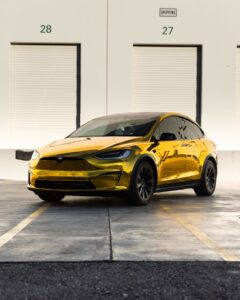
Discover the best color change wraps in Las Vegas, NV, with Dipped Auto Works. From choosing the perfect color to expert installation, learn how to transform your car with a vinyl wrap that suits your style and protects your vehicle. Call (702) 379-8716 to schedule your consultation today!
Product Brand: Dipped Auto Works
5
Pros
- Discover the best color change wraps in Las Vegas, NV, with Dipped Auto Works. From choosing the perfect color to expert installation, learn how to transform your car with a vinyl wrap that suits your style and protects your vehicle. Call (702) 379-8716 to schedule your consultation today!
