
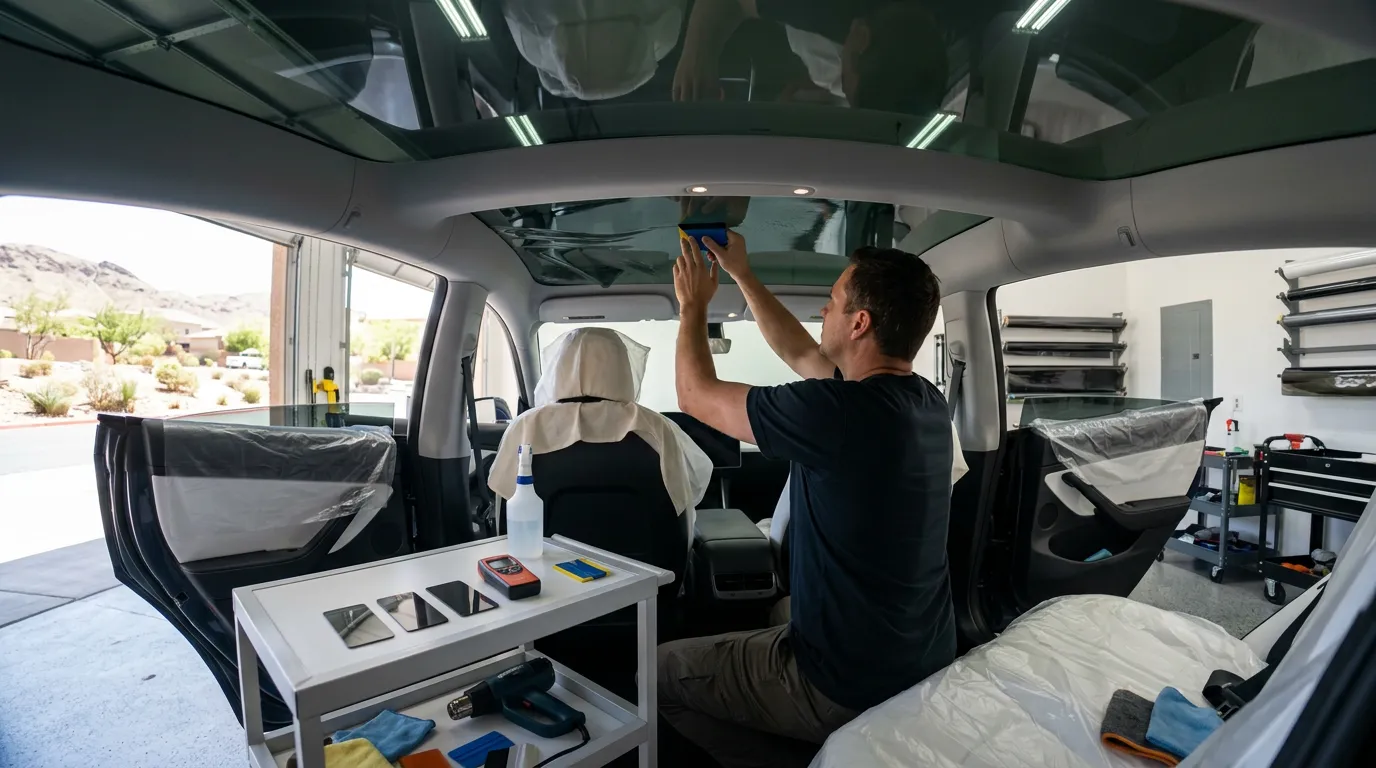
Tesla window tint in Summerlin, NV, is worth looking into if your Model 3 or Model Y feels uncomfortably warm after sitting in the sun. Tesla’s glass roofs give the cabin an open, spacious feeling, but large glass surfaces also raise questions about solar heat, glare, and interior comfort. If you’ve noticed warmth coming through the roof during summer, you may be wondering whether ceramic tint, carbon film, or a removable sunshade is the right choice.
The answer depends on your Tesla’s glass, the film’s heat-rejection properties, and how you use your vehicle. Some owners want to reduce sunlight coming through the roof. Others are more concerned about keeping the front seats comfortable, reducing glare through the side windows, or making the cabin easier to cool after outdoor parking.
There’s another consideration that shouldn’t be overlooked. Tesla glass roofs already have factory-installed solar-control features, and not every aftermarket window film is suitable for every roof-glass construction. You also need to understand Nevada’s tint laws before choosing film for the windshield, side windows, or rear glass.
At Dipped Auto Works, we provide professional Tesla window tint services for vehicle owners in Summerlin, NV. Our certified team offers carbon and ceramic tint packages, heat-rejecting film options, and warranty-backed installation services.
Here’s what Tesla owners should know about glass-roof tinting, film performance, and choosing a setup that fits their vehicle.
Table of Contents
- Why Tesla Glass Roofs Feel Hot in Summer
- Do Tesla Glass Roofs Already Have UV and Heat Protection?
- Ceramic Window Tint for Tesla Glass Roofs
- Carbon vs Ceramic Tesla Window Tint
- Tesla Model 3 vs Model Y Glass Roof Tint Options
- Tesla Glass Roof Tint vs Removable Sunshades
- Understanding Window Film Heat Rejection Ratings
- Can Aftermarket Tint Damage Tesla Roof Glass?
- Nevada Window Tint Laws for Tesla Owners
- Choosing the Right Tesla Window Tint Package
- What to Expect During Tesla Window Tint Installation
- How to Maintain Your Tesla Window Tint
- Other Ways to Keep Your Tesla Cooler
- Tesla Window Tint Frequently Asked Questions
- Schedule Tesla Window Tint at Dipped Auto Works
- Sources and References
Why Tesla Window Tint Matters for Glass Roofs in Summerlin, NV
Tesla’s large glass roof is one of the features that makes the Model 3 and Model Y feel different from vehicles with conventional metal roofs.
It lets natural light into the cabin and gives passengers a view of the sky.
During hot weather, though, that overhead glass can become a concern for owners who spend time parked outside or travel in bright sunlight.
Summerlin, NV, experiences the hot, dry weather found throughout the Las Vegas Valley.
According to the National Weather Service’s 1991-2020 Climate Normals, the region has prolonged summer heat and low annual precipitation.
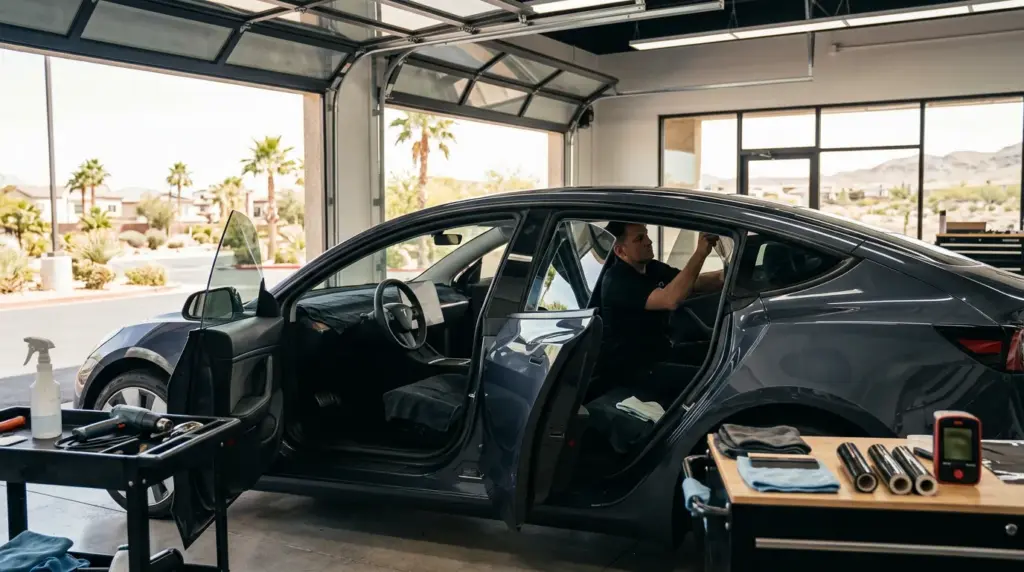
These conditions can make reducing solar heat exposure a regular concern for local Tesla owners.
How Does Heat Enter Through Automotive Glass?
Sunlight carries energy across several portions of the electromagnetic spectrum.
When sunlight reaches your Tesla, some energy is reflected, some passes through the glass, and some is absorbed.
Energy that reaches the seats, dashboard, and other interior surfaces can warm those materials.
The warmed surfaces then release heat into the surrounding cabin.
The roof, windshield, side windows, and rear glass all play a role in solar heat entering the vehicle.
Why Can the Roof Feel Warm Even With Factory Protection?
A glass roof can absorb sunlight and become warm.
Even when the glass blocks a large portion of UV radiation, that doesn’t mean it prevents all solar heat transfer.
Heat can still reach occupants through transmitted solar energy and heat released by warmed glass.
The amount varies by glass construction, vehicle model, sun position, and outdoor conditions.
This is why many owners start researching Tesla window tint after noticing warmth overhead on summer afternoons.
Does Window Tint Keep a Parked Tesla Cool?
Heat-rejecting film can reduce some of the solar energy entering through treated glass.
It cannot keep a vehicle cold while parked outside.
The vehicle’s body, surrounding air, glass, and interior materials can all contribute to heat buildup.
Window tint works as one part of a broader approach to cabin comfort.
Do Tesla Glass Roofs Already Have UV and Heat Protection?
Yes. Tesla vehicles use automotive glazing with factory solar-control properties.
The amount of UV and infrared protection can vary by vehicle, glass position, and model year.
This is something to check before deciding whether an extra film layer is worthwhile.
Tesla’s vehicle specifications describe ultraviolet and infrared protection as part of its glass features on current models.
Why Factory Glass Protection Matters
If your Tesla roof already rejects a large amount of incoming solar energy, adding another film may produce a smaller improvement than you expect.
That doesn’t mean aftermarket roof film cannot help.
It means the finished performance should be evaluated using the existing glass and the proposed film together.
A film’s published performance on ordinary reference glass may not describe its exact performance when applied to factory-treated Tesla roof glass.
UV Protection and Heat Rejection Are Different
Ultraviolet radiation represents only part of the sun’s energy.
A glass panel may provide strong UV protection while still allowing other forms of solar energy to enter.
That distinction matters when comparing products advertised as blocking 99% of UV rays.
A high UV rejection figure doesn’t mean the film blocks 99% of all solar heat.
If you’re considering Tesla window tint in Summerlin, NV, ask your installer about total solar energy rejection rather than relying only on UV percentages.
Should You Tint a Roof That Already Has Dark Glass?
Not automatically.
Factory-darkened glass may already provide enough comfort for some owners.
Before selecting another film, consider whether you’re bothered by actual solar warmth, visible sunlight, or both.
The best response may be a removable roof sunshade, a compatible heat-control film, or better heat rejection through the side windows.
Ceramic Tesla Window Tint: A Film Option for Glass Roofs
Ceramic window tint is a popular option among owners who want solar heat reduction without relying entirely on dark film.
Modern ceramic films use specialized materials designed to absorb or reject portions of incoming solar radiation.
These films come in different shades and performance levels.
What Makes Ceramic Tint Different?
Some ceramic film products can reject substantial amounts of infrared energy while maintaining relatively high visible light transmission.
This means the film may look lighter than expected for its solar-control performance.
Tesla’s own XPEL Window Tint information describes two ceramic film products:
- XPEL PRIME XR: A single-layer nano-ceramic window film.
- XPEL PRIME XR PLUS: A dual-layer nano-ceramic window film.
Tesla describes both as heat-rejecting films with UV protection.
These are product illustrations, not a statement that every installer stocks them or that they are automatically suitable for every glass roof.
Ask your installer which exact films are available and approved for your Tesla.
Can Ceramic Film Be Used on a Tesla Glass Roof?
Some automotive solar-control films are used for roof-glass applications, but product suitability must be confirmed first.
Tesla has offered roof-glass film as part of certain authorized window film programs in other markets. That doesn’t mean every aftermarket film is suitable for every Tesla roof.
Roof glazing has its own construction, factory treatment, curvature, and thermal characteristics.
Before approving installation, ask the shop to verify the film manufacturer’s compatibility guidance for your model and model year.
Is Dark Ceramic Tint Better Than Light Ceramic Tint?
Not always.
The darker film may reduce more visible light, but darkness alone doesn’t tell you the total amount of solar energy rejected.
A lighter ceramic film can sometimes deliver strong heat-rejection performance.
For owners who enjoy looking through the glass roof, a lighter film may be more appealing.
For someone who wants less visible sunlight, a darker shade or removable shade may be worth discussing, provided it is suitable for the glass and intended use.
Carbon vs Ceramic Tesla Window Tint: Which Should You Choose?
At Dipped Auto Works, our Tesla tinting services include carbon and ceramic packages.
Both can change the appearance of your vehicle’s windows and help reduce some solar exposure.
The product specifications determine the actual performance.
Carbon Window Tint
Carbon-based films can provide a darkened appearance, reduce glare, and reject some incoming heat.
Available performance depends on the manufacturer and film series.
Carbon tint may be worth considering when your goals include privacy, appearance, and glare reduction.
Not every carbon film is appropriate for glass-roof use.
Ceramic Window Tint
Ceramic films are commonly selected when heat rejection is a major concern.
Many ceramic products provide high infrared rejection without depending solely on a very dark shade.
The 3M Automotive Window Film Color Stable Series is one example of a nonmetallic film line incorporating ceramic technology for heat rejection.
The film’s suitability for each glass surface still needs to be confirmed.
Carbon vs Ceramic Window Tint Comparison
| Feature | Carbon Tint | Ceramic Tint |
|---|---|---|
| Reduces visible sunlight | Yes, depending on shade | Yes, depending on shade |
| Provides solar heat rejection | Product-dependent | Product-dependent, with high-performance options |
| UV protection | Depends on product | Depends on product |
| Privacy | Depends on darkness | Depends on darkness |
| Available in multiple shades | Yes | Yes |
| Glass-roof suitability | Requires confirmation | Requires confirmation |
| Suitable for Tesla side windows | Yes, with compliant film | Yes, with compliant film |
| Electronic compatibility | Depends on construction | Many nonmetallic products are designed to avoid signal interference |
If heat rejection is your main goal, start by comparing tested solar performance.
If privacy and a darker appearance matter more, discuss the available shades and legal limits.
Tesla Model 3 vs Model Y: Glass Roof Tint Options
Tesla window tint in Summerlin, NV, should be selected based on the exact vehicle rather than treating every Tesla glass roof as identical.
The Model 3 and Model Y have different roof and rear-glass layouts.
Those differences affect film fitting and the choice of removable accessories.
Tesla Model 3 Glass Roof Tint
The Model 3 uses a large glass roof area with front and rear sections.
Depending on the model year, the rear glass and roof layout may require extra attention during film installation.
Tesla sells Model 3 glass roof sunshades for compatible vehicles.
This gives owners a removable alternative to adding permanent film to the overhead glass.
For Model 3 owners, a practical evaluation might include:
- Existing factory roof-glass performance
- Front and rear roof sunlight exposure
- Side window heat rejection
- Rear glass coverage
- Whether a removable shade provides enough comfort
If your biggest problem is heat through the front side windows, roof film may not be the first service you need.
Tesla Model Y Panoramic Glass Roof Tint
The Model Y has a large panoramic-style glass roof.
Its overhead glass can make sunlight more noticeable for front and rear passengers, depending on the sun’s position.
Before selecting film, confirm the roof-glass construction for the vehicle’s production year.
The Model Y’s glass and available accessories have changed across production years.
Some owners may prefer a removable shade, while others may want a professional assessment of compatible solar film.
Does Model Year Affect Glass Roof Tint Installation?
Yes.
A film or accessory suitable for one production year may not fit or perform the same way on another.
Ask your installer to record the year and model before recommending any roof-glass treatment.
If you have a recently delivered Tesla, confirm whether your glass has factory treatments that affect film compatibility.
Tesla Glass Roof Tint vs Removable Sunshades: Which Is Better?
This is one of the most useful comparisons for owners considering Tesla window tint in Summerlin, NV.
A removable sunshade and adhesive-backed solar film address sunlight differently.
Neither one is automatically the right choice for every vehicle.
Option 1: Aftermarket Ceramic Roof Film
A compatible ceramic film may reduce the amount of solar energy passing through treated roof glass.
Once installed, it stays in place until professionally removed.
Potential advantages include:
- Permanent solar-control treatment
- No shade to install or remove each day
- Several possible visible-light levels, depending on glass compatibility
- A cleaner view through the roof than a fabric shade, depending on the selected film
The limitations include installation suitability, warranty considerations, and the possibility that the existing factory glass already provides substantial heat rejection.
Option 2: Tesla Removable Glass Roof Sunshade
Tesla offers removable roof sunshades for certain Model 3 and Model Y vehicles.
According to Tesla’s Model 3 Sunshade information, its listed shades for compatible Model 3 vehicles block 66% of luminous transmittance.
Tesla’s Model Y Sunshade information lists an 80% reduction in luminous transmittance for its compatible newer glass-roof sunshade.
These percentages describe visible light blocking, not total solar heat rejection.
Check the product’s compatibility notes for your exact production year.
Which Option Works Better for Your Tesla?
| Consideration | Compatible Ceramic Roof Film | Removable Roof Sunshade |
|---|---|---|
| Permanently installed | Yes | No |
| Can be removed without film stripping | No | Yes |
| Keeps a view through the roof | Depends on film shade | View is reduced when installed |
| Requires glass-film compatibility review | Yes | Requires accessory fit check |
| Can reduce solar exposure | Yes, depending on product and glass | Yes, by blocking incoming light |
| Flexible seasonal use | Limited | Yes |
| Changes roof-glass construction | Adds an adhesive film layer | Does not apply film to glass |
If you enjoy the panoramic roof but want less incoming heat, ask whether an approved light ceramic film is suitable.
If you want the ability to block overhead sunlight only during the hottest months, a removable shade may be a better fit.
How to Compare Tesla Window Tint Heat Rejection Ratings
Window film performance specifications can be confusing.
A film advertised as rejecting a high percentage of infrared radiation may not reject the same percentage of total solar energy.
When comparing products, pay attention to several measurements.
Visible Light Transmission (VLT)
VLT describes how much visible light passes through the film and glass.
A higher VLT typically means a lighter appearance.
A lower VLT means less visible light passes through.
VLT matters for appearance, visibility, and legal compliance.
Total Solar Energy Rejection (TSER)
TSER describes the percentage of total solar energy rejected under the stated test conditions.
It is useful when comparing films for heat-control purposes.
Ask for tested TSER information on comparable glass.
Infrared Rejection (IRR)
Infrared Rejection describes how much infrared radiation is rejected over a stated measurement range.
That range matters.
A film’s advertised infrared rejection figure may represent only a selected portion of the spectrum.
Infrared Energy Rejection (IRER)
IRER accounts for infrared energy transmission and the portion of absorbed infrared energy that can move into the vehicle.
It can help when evaluating the behavior of heat-rejecting film.
UV Rejection
UV rejection measures the share of ultraviolet radiation blocked.
Many automotive films provide high UV rejection, but UV performance alone doesn’t describe cabin cooling.
Which Rating Matters Most for Tesla Glass Roofs?
Look at TSER, the film’s compatibility with the existing roof glass, and how much visible light you want through the roof.
The film’s tested performance should not be confused with a guaranteed cabin temperature reduction.
Also remember that published film ratings may come from measurements on reference glass rather than your exact Tesla glazing.
Can Aftermarket Window Tint Damage Tesla Roof Glass?
Glass-roof tinting needs more consideration than simply choosing a film shade.
Roof glass may have factory coatings, laminate layers, special curvature, and other construction features.
Adding aftermarket film can change how the glass absorbs and releases solar energy.
Why Glass Compatibility Matters
Some window films absorb solar radiation while others reflect larger portions of it.
Applying a different film can change the temperature behavior of the glass.
Under certain conditions, heat absorption and uneven temperature distribution can contribute to thermal stress.
That does not mean all ceramic roof films will crack Tesla glass.
It means the installer should confirm that the chosen product is suitable for the actual glazing.
What Should Your Installer Check?
Before applying roof film, ask about:
- The Tesla model and production year
- Factory glass markings and construction
- Whether the film manufacturer approves the application
- Any limitations involving laminated or treated glass
- Curvature and installation requirements
- Existing glass chips or defects
- Warranty exclusions for glass and film
- Whether professional removal would be needed later
Film designed to be laminated inside newly manufactured glass is not necessarily the same product as an aftermarket film applied to an existing roof.
For reference, 3M’s Automotive Glazing Film AGF 2045 is designed for placement within laminated automotive glass, including panoramic sunroofs.
That construction is different from applying adhesive-backed film to an installed roof panel.
Will Roof Tint Void a Tesla Warranty?
You shouldn’t assume that every aftermarket film automatically voids the entire vehicle warranty.
You also shouldn’t assume that all glass-related damage will be covered after an aftermarket treatment.
Warranty responsibility may depend on the product, installation, failure, and applicable warranty terms.
Tesla’s own XPEL Window Tint program includes particular product and installation arrangements.
Those terms should not be assumed to apply to unrelated aftermarket installations.
Ask the shop for written film warranty details and review Tesla’s applicable vehicle warranty before proceeding.
Nevada Window Tint Laws for Tesla Owners in Summerlin, NV
When planning Tesla window tint in Summerlin, NV, it’s necessary to understand which glass surfaces are subject to Nevada’s automotive tint restrictions.
The official law is Nevada Revised Statutes NRS 484D.440.
The statute addresses windshields, front side windows, rear side windows, and rear windows.
It does not expressly list overhead roof glass as a separate window category.
That doesn’t establish universal approval for roof tint. The vehicle’s glazing specifications and applicable safety requirements still matter.
Front Side Windows
Nevada requires the windows immediately beside the driver to have a combined glass-and-film visible light transmission of at least 35%, with the statutory 7% tolerance.
The film must also be nonreflective.
The limit concerns the completed glass-and-film combination, not just the number printed on the film package.
Rear Side Windows
Nevada allows darker material on side windows behind the driver when the vehicle meets the applicable outside-mirror requirements.
Your installer should confirm which windows qualify.
Rear Window
Rear window tint is subject to the conditions stated in Nevada law, including the outside-mirror requirements.
This deserves attention on Teslas because some models have large, curved rear glazing that extends toward the roof.
The installer should distinguish the rear window from overhead roof glass when evaluating the legal and technical requirements.
Front Windshield
Nevada generally restricts aftermarket full-windshield material that changes its color or reduces visible light transmission, unless an exception applies.
A permitted upper-windshield strip has its own placement restrictions.
A nearly clear ceramic film is not automatically legal for full-windshield installation.
Does a Tesla Glass Roof Have the Same Tint Limit as the Front Side Windows?
The statute does not expressly assign the front-side-window VLT limit to a separate overhead roof panel.
But don’t treat that as permission to apply any film without checking its suitability.
A professional installer should review both the law and the glass manufacturer’s requirements before approving the work.
Choosing a Tesla Window Tint Package in Summerlin, NV
Tesla owners can approach window tinting in several ways.
The right package depends on whether the main concern is front-seat heat, rear passenger comfort, privacy, or overhead sunlight.
At Dipped Auto Works, our published tint packages include front side window, all-side, and full tint options in carbon and ceramic film.
We also list ceramic glare strip and windshield treatments, subject to applicable legal restrictions.
Roof-glass film suitability and availability should be confirmed separately during a consultation.
Option 1: Front Side Window Ceramic Tint
This option focuses on the windows beside the front seats.
It may help reduce solar exposure and glare entering from the sides.
Choose a shade that meets Nevada’s combined glass-and-film transmission requirements.
Option 2: Side and Rear Window Ceramic Tint
Tinting suitable side and rear windows can reduce solar energy entering through a greater area of the cabin.
This may be useful for Model Y owners who regularly carry passengers.
Discuss the factory privacy glass and existing treatments before choosing a shade.
Option 3: Full Legal Window Tint Package
A broader package can treat multiple eligible windows with suitable carbon or ceramic film.
Ask for a written list of included glass areas.
Don’t assume that “full tint” includes the glass roof or an unrestricted full-windshield installation.
Option 4: Evaluate the Glass Roof Separately
If overhead heat is your biggest concern, request a roof-specific assessment.
The shop should check whether a compatible film is available and approved for the vehicle.
If film isn’t suitable, ask about removable sunshade options.
Tesla Tint Package Questions to Ask
Before scheduling, use this checklist:
- What film brand and series will be installed?
- Is the film carbon or ceramic?
- What are its tested solar heat-rejection ratings?
- Which side and rear windows are included?
- Will existing factory glass treatments affect the result?
- Is aftermarket roof film suitable for my exact Tesla?
- Are there special glass warranty restrictions?
- Does the selected shade meet Nevada law?
- What installation and aftercare instructions apply?
- What warranty covers the film and installation?
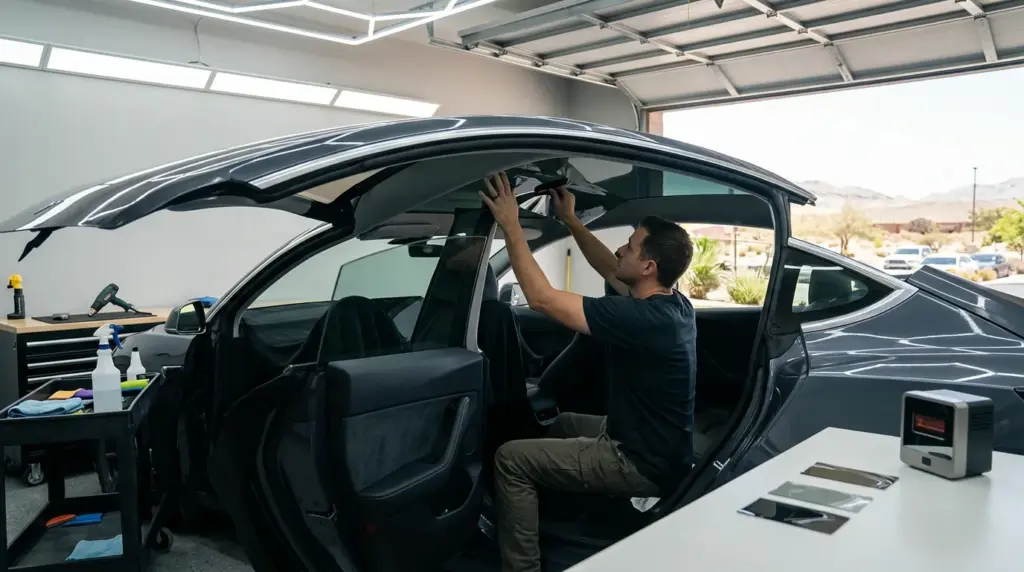
What to Expect During Professional Tesla Window Tint Installation
Window tint installation should begin with a review of the vehicle and glass being treated.
A professional shop needs to prepare the surfaces, select suitable film, and account for the vehicle’s glass shape.
Step 1: Vehicle and Glass Inspection
The installer checks the Tesla’s model, year, and selected glass areas.
Existing tint, glass damage, and factory treatments should be discussed.
For roof film, the installer should confirm compatibility before beginning work.
Step 2: Film Selection
The technician explains the available film series and shades.
You can compare appearance, heat-rejection ratings, and warranty terms.
Legal requirements also determine which shades may be installed on certain windows.
Step 3: Glass Preparation
The glass is cleaned to remove dust, residue, and surface contamination.
Tesla vehicles also have interior screens, cameras, trim, and electronics that require careful protection during tint installation.
The technician should use appropriate procedures to keep installation moisture away from sensitive components.
Step 4: Film Application
The film is fitted and applied to the selected glass.
Curved rear glass may require additional shaping and fitting.
Roof-glass installation, when approved, may involve different access and handling requirements from conventional side windows.
Step 5: Inspection and Curing Instructions
The installer checks the final appearance and explains the film’s drying process.
Some films may show temporary moisture patterns while curing.
Ask how long to wait before cleaning the glass or operating treated windows.
The exact waiting period depends on the film and installation conditions.
How to Maintain Tesla Window Tint in Summerlin, NV
Once your Tesla window tint is installed, proper cleaning can help preserve its appearance.
The film manufacturer’s instructions should always take priority over generic cleaning advice.
Avoid Cleaning Fresh Film Too Soon
Newly installed window tint needs time to settle and dry.
Your installer should explain when the glass can be cleaned safely.
Don’t pick at film edges or try to push out moisture yourself.
If something looks wrong after the recommended curing period, contact the shop.
Use Suitable Glass Cleaners
Choose cleaning products approved for your window film.
Some film manufacturers recommend avoiding ammonia-based products or abrasive cleaners.
Use a clean, soft microfiber cloth and gentle pressure.
Avoid scraping the film with blades or hard tools.
Be Careful With Rear Glass
Tesla rear windows may have integrated heating elements or other features.
Don’t scrape the interior glass or use methods that could damage film, electrical components, or defroster lines.
For any glass surface, follow the vehicle manufacturer’s cleaning guidance.
Check the Film Periodically
During regular cleaning, look for:
- Edge lifting
- Persistent bubbles
- Peeling
- Haze that does not clear
- Scratches in the film
- Changes in film appearance
Contact your installer if you notice concerns.
Dipped Auto Works provides warranty-backed Tesla window tint services. Ask for the written terms associated with your installation.
Other Ways to Keep Your Tesla Cooler in Summerlin, NV
Even with high-performance ceramic tint, you’ll still need to manage cabin heat during summer.
Tesla provides several vehicle features that can help.
Precondition Your Cabin
Tesla’s climate system allows owners to cool the vehicle before departure using the mobile app or scheduled climate settings.
This can make entering the car more comfortable after it has been parked.
Preconditioning does use energy.
Use Cabin Overheat Protection
Tesla offers Cabin Overheat Protection on supported vehicles.
Depending on vehicle settings and software, the system can use the air conditioning or fan when the cabin reaches its activation temperature.
This feature has time and battery-related limitations.
It should never be relied upon to protect unattended children or pets.
Park in Covered Areas When Possible
Shade can reduce direct sunlight reaching the roof, windshield, and body panels.
A garage or shaded parking space can help limit heat buildup.
Use a Removable Roof Sunshade
A model-compatible shade can reduce overhead sunlight without permanently applying film.
You can remove it when you want the open view through the glass roof.
Keep the Air Conditioning System Maintained
A properly functioning climate system matters during hot weather.
Follow Tesla’s maintenance guidance for cabin filters and climate-system concerns.
Window tint can reduce some incoming solar heat, but it cannot repair a poorly performing air conditioner.
Tesla Window Tint in Summerlin, NV: 7 Frequently Asked Questions
1. Is ceramic tint worth getting on a Tesla glass roof?
It may be worth considering if your roof glass allows a compatible aftermarket film and you want to reduce some incoming solar energy.
The existing factory glass already provides solar-control properties, so the improvement from another film layer depends on the glass and product.
Have a professional installer verify compatibility before choosing roof film.
A removable sunshade is another option.
2. Does the Tesla Model Y glass roof need extra tint?
Not every Model Y needs extra glass-roof film.
Some owners find the factory glazing comfortable, while others notice overhead warmth during summer.
The right solution depends on the production year, glass characteristics, sunlight exposure, and your personal comfort preferences.
A removable shade may be sufficient without changing the glass.
3. Can ceramic window tint crack a Tesla glass roof?
Film can change the way solar energy is absorbed by glass, and certain film-and-glass combinations may introduce thermal stress.
That does not mean all ceramic films will crack Tesla roof glass.
The installer should verify whether the exact product is approved for the roof-glass construction.
Ask about compatibility, glass inspection, and warranty coverage before installation.
4. Is ceramic tint better than carbon tint for a Tesla?
Some ceramic films offer stronger solar heat rejection than certain carbon films, including at lighter visible shades.
But product performance varies.
Compare tested Total Solar Energy Rejection, infrared performance, visible light transmission, and manufacturer specifications.
For many owners concerned about summer cabin heat, ceramic film deserves consideration.
5. Is Tesla glass roof tint legal in Summerlin, NV?
Nevada’s window tint statute addresses windshields, side windows, and rear windows. It does not expressly establish a separate visible-light-transmission limit for overhead roof glass.
That doesn’t mean every aftermarket roof film is suitable or permitted under all applicable requirements.
The installer should review the glass construction and relevant rules before installation.
6. Will Tesla roof tint improve battery range?
Reducing solar energy entering through glass may reduce some air-conditioning demand under certain conditions.
That doesn’t guarantee a measurable or consistent increase in battery range.
The actual effect depends on outdoor conditions, vehicle use, climate settings, and the film’s performance.
Choose film based on verified comfort and solar-control benefits rather than expecting a particular range improvement.
7. Where can I schedule Tesla window tint near Summerlin, NV?
You can contact Dipped Auto Works at 4305 Dean Martin Dr #120, Las Vegas, NV 89103.
Our certified installation team offers carbon and ceramic Tesla window tint services.
We can review your vehicle’s glass layout, discuss suitable film options, explain Nevada tint requirements, and assess whether roof-glass film is appropriate.
Call (702) 379-8716 or visit our contact page to request an appointment.
Schedule Tesla Window Tint Near Summerlin, NV, at Dipped Auto Works
Choosing Tesla window tint isn’t just about how dark the finished glass looks.
For Model 3 and Model Y owners, it’s also about solar heat rejection, passenger comfort, vehicle glass compatibility, and selecting a film that meets legal requirements.
If you notice excess sunlight through your side windows, a suitable ceramic tint may help reduce incoming solar energy.
If the glass roof is your biggest concern, start by checking the factory glazing and comparing compatible film options with removable roof sunshades.
At Dipped Auto Works, we help Tesla owners from Summerlin, NV, understand their window tint options.
Our certified team offers carbon and ceramic tint services for eligible vehicle glass, with warranty-backed installations.
We also provide related Tesla services, including:
Whether you recently purchased a Tesla or want better cabin comfort in your current vehicle, we can help you understand which window treatments are suitable.
Contact Dipped Auto Works
Business Name: Dipped Auto Works
Address: 4305 Dean Martin Dr #120, Las Vegas, NV 89103
Phone: (702) 379-8716
Business Hours: Monday through Saturday, 9 AM to 6 PM
Website: www.dippedautoworks.com
Schedule an Appointment: Contact Dipped Auto Works
Want a more comfortable Tesla cabin during the summer?
Call (702) 379-8716 or fill out our contact form to schedule a Tesla window tint consultation.
Tell us your Tesla’s model, model year, and which glass areas concern you most.
Our team can explain available ceramic and carbon films, discuss glass-roof compatibility where applicable, and help you select a lawful treatment for your vehicle.
Sources and References
The following sources support the information about Tesla glass-roof accessories, window film performance, legal tint requirements, climate conditions, and local services.
1. Model 3 Sunshade Bundle
- Publisher: Tesla
- Publication Date: Not listed; online product information
- URL: https://shop.tesla.com/product/model-3-sunshade-bundle
2. Model Y Sunshades
- Publisher: Tesla
- Publication Date: Not listed; online product information
- URL: https://shop.tesla.com/product/model-y-sunshades
3. XPEL Window Tint
- Publisher: Tesla
- Publication Date: Not listed; online product and installation information
- URL: https://www.tesla.com/support/xpel-window-tint
4. 3M Automotive Window Film Color Stable Series
- Publisher: 3M
- Publication Date: Not listed
- URL: https://www.3m.com/3M/en_US/p/d/b00016620/
5. 3M Automotive Glazing Film AGF 2045
- Publisher: 3M
- Publication Date: Not listed
- URL: https://www.3m.com/3M/en_US/p/d/b5005510012/
6. Nevada Revised Statutes, NRS 484D.440: Restrictions on Tinting of Windshield or Side or Rear Window
- Publisher: Nevada Legislature
- Publication Date: Current online statutory compilation; webpage publication date not listed
- URL: https://www.leg.state.nv.us/NRS/NRS-484D.html#NRS484DSec440
7. Las Vegas 1991-2020 Climate Normals
- Publisher: National Weather Service, NOAA
- Publication Date: 2021 climate normals release
- URL: https://www.weather.gov/vef/1991-2020Normals
8. Tesla Window Tint
- Publisher: Dipped Auto Works
- Publication Date: Not listed
- URL: https://dippedautoworks.com/tesla-services/tesla-window-tint/
9. Automotive Window Tint
- Publisher: Dipped Auto Works
- Publication Date: Not listed
- URL: https://dippedautoworks.com/services/window-tint/
Best Color Change Wraps in Las Vegas, NV: A Comprehensive Guide
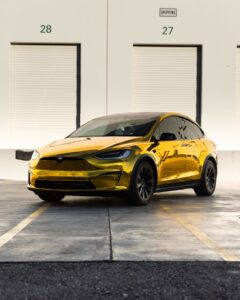
Discover the best color change wraps in Las Vegas, NV, with Dipped Auto Works. From choosing the perfect color to expert installation, learn how to transform your car with a vinyl wrap that suits your style and protects your vehicle. Call (702) 379-8716 to schedule your consultation today!
Product Brand: Dipped Auto Works
5
Pros
- Discover the best color change wraps in Las Vegas, NV, with Dipped Auto Works. From choosing the perfect color to expert installation, learn how to transform your car with a vinyl wrap that suits your style and protects your vehicle. Call (702) 379-8716 to schedule your consultation today!
