

Window Tint in Paradise, NV can help drivers manage solar heat, bright daytime glare, privacy, and the appearance of their vehicles. For people who regularly travel near the Strip, choosing tint also means thinking about nighttime visibility. A film that looks great under bright afternoon sun still needs to feel comfortable when you are leaving a parking garage or traveling after dark.
Paradise, NV is an unincorporated town administered by Clark County near the center of the valley. Drivers in the area can spend plenty of time moving between busy streets, parking areas, workplaces, homes, and the Strip. Those driving conditions make film selection about more than picking the darkest shade available.
Dipped Auto Works provides professional window tint with carbon and ceramic film choices. When choosing Window Tint in Paradise, NV, compare the film’s Visible Light Transmission, solar heat measurements, glare control, warranty, and Nevada legal limits before deciding on a shade.
Table of Contents
- Why Film Choice Matters Near the Strip
- Carbon Window Tint in Paradise, NV
- Ceramic Window Tint in Paradise, NV
- Carbon vs Ceramic Window Tint
- What Is VLT?
- Choosing a Window Tint Shade
- Heat Rejection and TSER
- Understanding Infrared Rejection
- Tint for Daytime Driving Near the Strip
- Tint for Night Driving Near the Strip
- Privacy and Window Tint
- Nevada Window Tint Limits
- Rear Window Tint Rules
- Windshield Tint Rules
- How Factory Glass Changes Your Choice
- Window Tint for Tesla Vehicles
- What to Expect During Installation
- How to Choose Window Tint in Paradise, NV
- Schedule Window Tint in Paradise, NV
- Frequently Asked Questions
- Sources
Why Window Tint in Paradise, NV Requires the Right Film Choice
Window Tint in Paradise, NV can serve several purposes at the same time.
During the day, film can reduce visible glare and help control solar energy entering through vehicle glass. At night, the amount of visible light passing through the film can affect how easily you see through the windows.
That balance deserves attention for drivers near the Strip.
A driver may leave home in bright afternoon sun, spend time in traffic, enter a shaded parking structure, and return to the road after sunset. The amount of outside light can change sharply during one trip.
The darkest tint is not always the right answer.
Film construction and shade should be considered separately. A lighter ceramic film can have strong solar-control properties without looking as dark as another film. A dark carbon film can give you more privacy and visible-light reduction while still providing solar protection.
Before choosing Window Tint in Paradise, NV, decide which of these goals matters most:
- Solar heat control
- Daytime glare reduction
- Privacy
- Exterior appearance
- Nighttime visibility
- UV filtering
- A lighter cabin appearance
- A darker, more private cabin
- Nevada legal compliance
- Warranty coverage
Once you know what you want from the film, comparing carbon and ceramic tint becomes much easier.
Carbon Window Tint in Paradise, NV
Dipped Auto Works offers carbon film as one of its window tint choices.
Carbon window film can provide a dark, neutral appearance without using a metallic film construction. The exact solar properties depend on the manufacturer, product line, and shade.
Carbon Window Tint in Paradise, NV may appeal to drivers who want:
- More privacy
- A darker exterior appearance
- Reduced visible glare
- UV filtering
- Solar heat control
- Non-metal film
- Several shade choices
- Warranty-backed installation
Carbon tint can work well when appearance and privacy rank high on your list.
It is still worth checking the film data.
Two carbon films that look almost identical can have different solar-energy measurements. Ask what product is being installed rather than judging it only from a sample’s color.
Dipped Auto Works lists carbon packages for front windows, side windows, and fuller vehicle coverage on its window tint service page.
Ceramic Window Tint in Paradise, NV
Ceramic tint is another choice for drivers who spend a lot of time near the Strip or on surrounding roads.
Ceramic film is often selected when solar heat control is high on the driver’s list. Modern ceramic films can be offered in lighter and darker shades while still being designed to manage solar energy.
The International Window Film Association describes nanoceramic film as a window film construction that uses infrared-absorbing particles.
Ceramic Window Tint in Paradise, NV may suit drivers looking for:
- Strong solar heat control
- Infrared rejection
- UV filtering
- Reduced glare
- Light or dark tint choices
- Non-metal construction
- Good outward clarity
- Warranty-backed film
A ceramic label alone does not tell you how the film will perform.
Ask for the VLT and TSER of the exact film and shade being considered.
Dipped Auto Works also lists ceramic packages and ceramic windshield options on its window tint page.
Carbon vs Ceramic Window Tint Near the Strip
Both carbon and ceramic Window Tint in Paradise, NV can make sense. The better fit depends on what you expect from the film.
| Film Feature | Carbon Tint | Ceramic Tint |
|---|---|---|
| Dark appearance | Available | Available |
| Light appearance | Depends on film line | Available in many film lines |
| Privacy | Depends on VLT | Depends on VLT |
| Glare reduction | Yes | Yes |
| UV filtering | Depends on product | Depends on product |
| Solar heat control | Yes | Often a major focus |
| Infrared control | Depends on product | Often a major focus |
| Non-metal choices | Yes | Yes |
| Warranty | Depends on film and installer | Depends on film and installer |
Drivers near the Strip may find ceramic especially appealing when they want solar control without choosing very dark glass.
Carbon can make sense when privacy, appearance, and glare reduction are closer to the top of the list.
What this means is that the film type and shade should be compared together.
What Is VLT for Window Tint in Paradise, NV?
VLT means Visible Light Transmission.
It measures the percentage of visible light passing through a glazing system.
Higher VLT means more visible light passes through.
Lower VLT means less visible light passes through.
A rough shade guide looks like this:
| Approximate VLT | Appearance |
|---|---|
| 70% | Very light |
| 50% | Light |
| 35% | Medium |
| 20% | Dark |
| 5% | Very dark |
Film lines do not all use the same percentages.
VLT also does not tell you how much total solar heat a film rejects.
That distinction matters when choosing Window Tint in Paradise, NV. A darker film blocks more visible light, but a lighter ceramic film may still have strong solar-control data.
Choosing a Shade for Window Tint in Paradise, NV
Think about both daylight and nighttime conditions before choosing a shade.
Lighter Tint
A lighter film may suit drivers who want solar protection without a heavily tinted appearance.
Lighter ceramic film can be worth comparing if you want:
- More visible light through the glass
- Easier nighttime viewing
- A subtle exterior appearance
- Solar heat control
- Reduced UV exposure
Medium Tint
Medium shades can give the vehicle a noticeable tinted appearance while allowing more visible light through than very dark film.
They may appeal to drivers trying to balance privacy, glare control, and nighttime viewing.
Dark Tint
Dark tint can provide more daytime privacy and stronger visible-light reduction.
The tradeoff is reduced visibility through the glass in dark surroundings.
A dark film that feels comfortable under bright afternoon sun may feel very different when entering a parking structure at night.
That is why Window Tint in Paradise, NV should be viewed from both inside and outside the vehicle when possible.
Heat Rejection and TSER for Window Tint in Paradise, NV
If heat control is one of your goals, learn the term TSER.
TSER stands for Total Solar Energy Rejection.
The International Window Film Association describes TSER as a measurement used to explain how much total solar energy a filmed glazing system rejects.
TSER is calculated from Solar Heat Gain Coefficient.
A higher TSER percentage means the tested glass-and-film system rejects a larger share of incoming solar energy.
This makes TSER useful when comparing Window Tint in Paradise, NV for hot daytime conditions.
Do not compare films by darkness alone.
Ask the installer:
- What is the film’s VLT?
- What is its TSER?
- What shade is the TSER figure tied to?
- What glass was used for the test?
- Is the number for the exact product being installed?
These questions give you a much clearer view of how the film handles solar energy.
Understanding Infrared Rejection
Window tint advertising often includes an infrared rejection percentage.
You may see this written as IR rejection or IRR.
Infrared energy is one part of the solar spectrum. It is not all solar energy.
The International Window Film Association’s 2026 automotive education guide says IR rejection should be considered alongside TSER or Solar Heat Gain Coefficient. The guide also explains that IRR is not defined by one national or international testing method.
This matters because one manufacturer’s infrared percentage may be measured across a different wavelength range from another manufacturer’s figure.
A large IR number should not automatically be read as the percentage of all heat rejected by the film.
When comparing ceramic Window Tint in Paradise, NV, ask for TSER as well as IR data.
Bottom line, TSER gives you a broader picture of total solar performance.
Window Tint for Daytime Driving Near the Strip
Daytime driving creates a different set of needs from nighttime driving.
Bright sunlight entering through side glass can create glare. Solar energy entering through the windows can also add to cabin heat.
A driver who spends hours on the road may care more about solar-control measurements than someone choosing tint mainly for appearance.
For daytime Window Tint in Paradise, NV, compare:
- VLT
- TSER
- Infrared data
- UV filtering
- Glare control
- Shade
- Film color
Do not assume that choosing 5% or 20% film is the only way to deal with bright sun.
Ceramic products can provide solar control at lighter VLT levels.
This may be useful for someone who wants heat control but does not want every window to look extremely dark.
Window Tint in Paradise, NV for Night Driving Near the Strip
Nighttime driving deserves just as much thought as daytime heat.
The Strip and surrounding roads can include bright signs, headlights, dark side streets, parking structures, and changing levels of outside light.
Tint can cut visible-light glare, but very dark tint also reduces the amount of light reaching your eyes through the window.
That can affect how easily you see objects outside in darker settings.
When considering Window Tint in Paradise, NV, think about situations such as:
- Pulling out of a dark parking garage
- Backing into a space at night
- Looking through side glass on a poorly lit street
- Checking mirrors in low light
- Driving after sunset
- Moving between bright and dark areas
A shade that feels comfortable during a sunny afternoon may feel much darker after sunset.
Look through film samples from inside the vehicle when possible.
Privacy and Window Tint Near the Strip
Privacy is another reason people choose Window Tint in Paradise, NV.
Lower VLT generally makes it harder to see into a vehicle from outside during daylight.
The IWFA notes that privacy is related to visible-light transmission, reflectivity, and even the color of the vehicle interior.
A darker interior can make the window appear darker from outside.
Drivers who park in busy areas may prefer more privacy on rear glass. Nevada law treats rear side and rear windows differently from the windows immediately beside the driver, provided the vehicle meets the mirror condition described in state law.
Tint should never be treated as a substitute for securing belongings.
Do not leave visible bags, electronics, cash, or other property inside a parked vehicle just because the glass is tinted.
Nevada Limits for Window Tint in Paradise, NV
Nevada Revised Statutes NRS 484D.440 sets rules for tint installed on vehicle glass.
For a window immediately to the right or left of the driver, Nevada allows tint when the window is:
- Nonreflective, and
- Has total light transmission through the combination of transparent material and safety glazing of at least 35%, with a tolerance of 7%.
The phrase “combination of transparent material and safety glazing” matters.
The state is looking at the finished glass-and-film system, not only the number printed on the film sample.
Factory glass already reduces some visible light.
Once film is installed over it, the final VLT can be lower than the film’s stated VLT by itself.
If you are choosing Window Tint in Paradise, NV near Nevada’s front side-window limit, ask about the expected finished measurement.
Nevada Rear Window Tint Rules
Nevada treats rear glass differently.
NRS 484D.440 provides an exception for side windows behind the driver and for the rear window when the vehicle has an outside mirror on each side positioned to give the driver a view of the highway for at least 200 feet behind the vehicle.
This can give drivers more flexibility with rear-window shades.
Still, darker is not always better.
Very dark rear film can make direct nighttime viewing harder.
Think about how often you drive after dark, back into spaces, or rely on direct visibility through the rear glass before choosing a very low VLT.
Windshield Tint Rules in Nevada
Nevada also has separate rules for material applied to the topmost portion of the windshield.
NRS 484D.440 states that permitted material in that area must have a bottom edge at least 29 inches above the undepressed driver’s seat when measured using the method written in the statute.
The material cannot be red or amber.
Drivers interested in ceramic windshield film for solar control should discuss Nevada law with their installer before making a choice.
Do not assume that a nearly clear film is automatically permitted across an entire windshield.
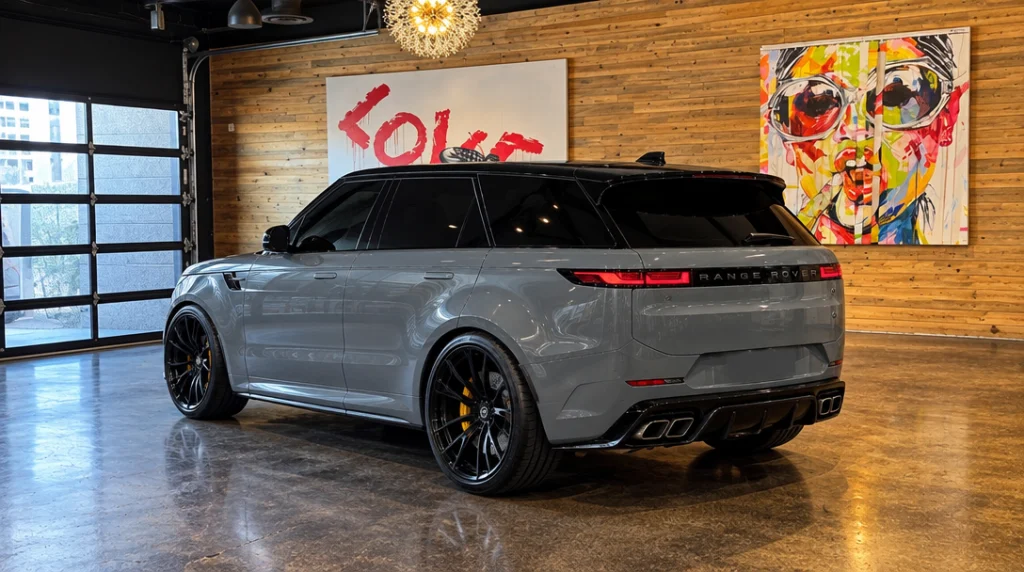
Dipped Auto Works lists ceramic windshield film and a glare strip among its window tint options.
Factory Glass and Window Tint in Paradise, NV
Factory glass can change both the appearance and final VLT of aftermarket tint.
Many SUVs, trucks, and crossovers have darker factory privacy glass behind the front seating area.
That glass may already look tinted, but darkness alone does not tell you how well it controls solar heat.
Adding film over factory privacy glass can change:
- Final VLT
- Privacy
- Exterior appearance
- Glare
- Solar-energy control
Your front side glass also has its own factory VLT.
That is why the completed glass-and-film measurement matters when you are trying to stay within Nevada’s front side-window rule.
Ask the installer to look at your vehicle’s existing glass before settling on a shade.
Tesla Window Tint in Paradise, NV
Tesla owners may have their own film questions because of the amount and shape of glass used on several models.
Dipped Auto Works provides dedicated Tesla window tint services.
Tesla owners comparing Window Tint in Paradise, NV can ask about:
- Carbon and ceramic choices
- VLT
- TSER
- Infrared measurements
- Side-window shades
- Rear-glass coverage
- Windshield choices
- Factory glass
- Nevada limits
- Warranty coverage
Dipped Auto Works also provides Tesla paint protection film, Tesla vinyl wrap, and Tesla ceramic coating for owners planning other work on the same vehicle.
What to Expect During Window Tint Installation
Professional Window Tint in Paradise, NV starts with preparing the glass.
The installer cleans the inside surface so dirt, hair, and debris are less likely to become trapped under the film.
Film is cut and prepared for the window. Curved glass may require forming before installation.
An installation solution allows the film to be positioned on the glass. A squeegee then removes moisture between the film and glass.
Some moisture may remain during the drying period.
Fresh tint can temporarily show:
- Mild haze
- Small wet-looking areas
- Slight visual distortion
These conditions can change as the remaining moisture leaves the film.
Dipped Auto Works states that tint installation generally takes a few hours, depending on vehicle size and how many windows are being tinted.
Follow the installer’s instructions before lowering the windows or cleaning the inside glass.
How to Choose Window Tint in Paradise, NV
Choosing film becomes much easier when you decide what matters most before looking at shades.
If Heat Is Your Main Concern
Compare TSER.
Look at infrared measurements too, but do not use the IR number by itself.
Ceramic film is worth comparing when solar control sits high on your list.
If Privacy Is Your Main Concern
Look at VLT.
Lower VLT creates a darker appearance and usually increases daytime privacy.
Make sure the chosen shade works with Nevada law for the window being tinted.
If Night Visibility Matters Most
Stay mindful of very dark shades.
Look through samples from the driver’s seat when possible.
Think about parking structures, dim roads, and late-night travel.
If Appearance Matters Most
Compare the film on your actual vehicle.
Glass color, interior color, viewing angle, and existing factory privacy glass can all affect how tint looks.
If You Want a Mix of Everything
Compare carbon and ceramic film side by side.
Look at VLT, TSER, shade, warranty, and Nevada limits before deciding.
Schedule Window Tint in Paradise, NV
Window Tint in Paradise, NV should fit the way you use your vehicle near the Strip and throughout the surrounding area.
A driver focused on daytime solar heat may lean toward ceramic film with strong TSER data. A driver more focused on privacy and appearance may find carbon film fits the goal. Drivers who spend a lot of time on the road after dark should also think carefully about VLT and outward visibility.
Dipped Auto Works provides carbon and ceramic window tint installed by certified installers. The shop lists warranty coverage on its window tint products and services and includes Paradise, NV among its service areas.
Call (702) 379-8716 to discuss your vehicle and film choices, or visit the Dipped Auto Works contact page to schedule an appointment.
Frequently Asked Questions About Window Tint in Paradise, NV
1. Which window tint is good for drivers near the Strip?
The right film depends on your priorities. Ceramic film is worth comparing when solar heat control matters most. Carbon film can work well for privacy, appearance, glare reduction, and solar protection. Drivers who travel after dark should also think about VLT and nighttime visibility.
2. Is ceramic tint better for daytime heat?
Many ceramic films are designed with strong solar-control properties. Compare TSER for the exact ceramic and carbon products available. A ceramic label alone does not tell you how much total solar energy the film rejects.
3. Does dark window tint reject more heat?
Not automatically. Darker tint reduces more visible light, but heat rejection depends on film construction and solar measurements. A lighter ceramic film can have strong TSER even though it does not look very dark.
4. What is Nevada’s front side-window tint limit?
Nevada NRS 484D.440 states that windows immediately to the right and left of the driver may use nonreflective film when total light transmission through the combined film and safety glazing is at least 35%, with a 7% tolerance.
5. Is 35% film guaranteed to meet the Nevada limit?
No. Factory glass and aftermarket film work together. The film’s stated VLT is not always the same as the final measurement of the completed window. Ask about the expected combined VLT before installation.
6. Is very dark tint a good choice for driving near the Strip at night?
Very dark tint can add privacy, but it also reduces visible light entering through the glass. Drivers who spend a lot of time on the road after sunset should think about visibility in parking structures, darker streets, and other low-light settings before choosing a very low VLT.
7. How do I schedule Window Tint in Paradise, NV?
Call Dipped Auto Works at (702) 379-8716 or visit the contact page. Share your vehicle year, make, model, current tint condition, windows you want covered, and whether your main goal is heat control, privacy, glare reduction, or appearance.
Sources
Nevada Automotive Window Tint Law
- Title: NRS 484D.440, Restrictions on Tinting of Windshield or Side or Rear Window
- Publisher: Nevada Legislature
- Publication Date: Current Nevada Revised Statutes
- URL: https://www.leg.state.nv.us/NRS/NRS-484D.html
Automotive Window Film Measurements
- Title: Automotive Education Guide 2026
- Publisher: International Window Film Association
- Publication Date: 2026
- URL: https://iwfa.com/wp-content/uploads/2026/01/Automotive-Education-Guide-2026.pdf
Paradise, NV Community Information
- Title: Winchester Paradise
- Publisher: Clark County, Nevada
- Publication Date: Current county planning page
- URL: https://www.clarkcountynv.gov/government/departments/comprehensive_planning_department/divisions/advanced_planning_division/winchester-paradise
Dipped Auto Works Window Tint Service
- Title: Window Tint
- Publisher: Dipped Auto Works
- Publication Date: Current service page
- URL: https://dippedautoworks.com/services/window-tint/
Best Color Change Wraps in Las Vegas, NV: A Comprehensive Guide
Discover the best color change wraps in Las Vegas, NV, with Dipped Auto Works. From choosing the perfect color to expert installation, learn how to transform your car with a vinyl wrap that suits your style and protects your vehicle. Call (702) 379-8716 to schedule your consultation today!
Product Brand: Dipped Auto Works
5
Pros
- Discover the best color change wraps in Las Vegas, NV, with Dipped Auto Works. From choosing the perfect color to expert installation, learn how to transform your car with a vinyl wrap that suits your style and protects your vehicle. Call (702) 379-8716 to schedule your consultation today!
